Our Shared Musical Journey
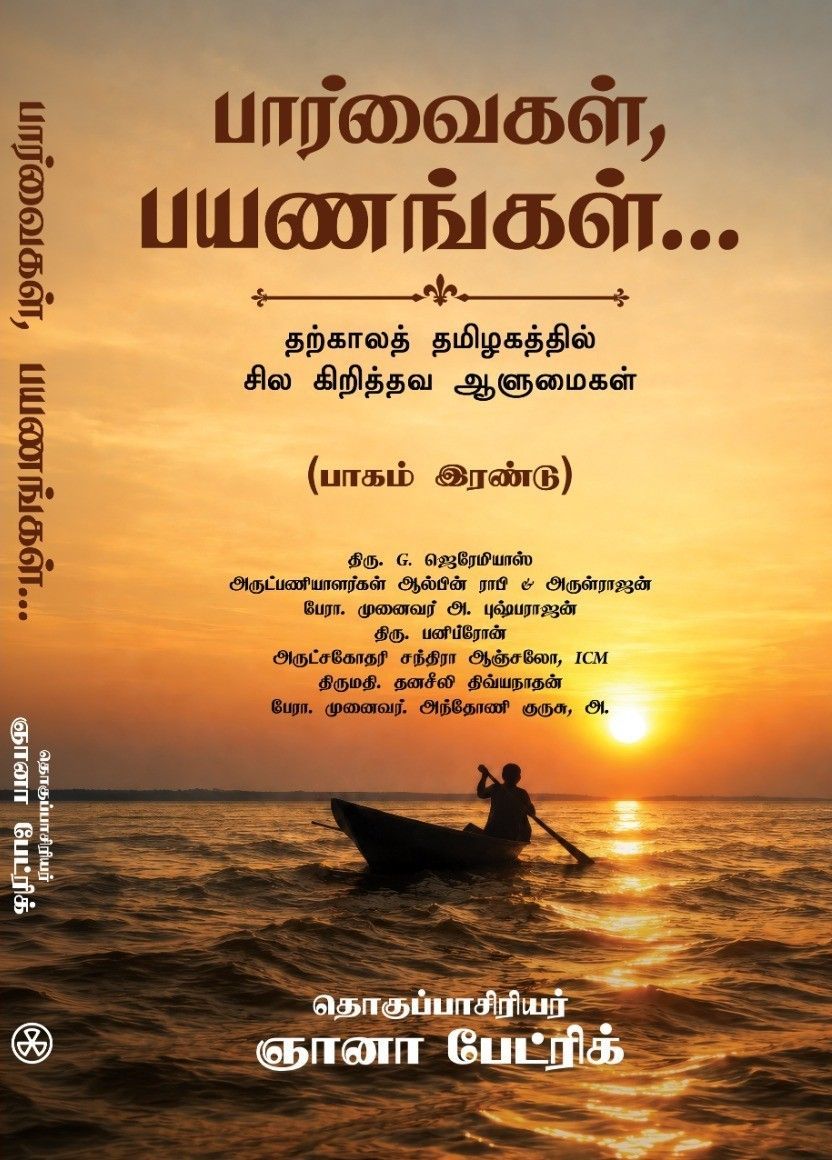
Outlooks and Journeys
Our Shared Musical Journey
(Fr. Gnana Patrick, A Tamil Catholic priest, who is both an author and a publisher, requested me and Fr. Albin Roby
to contribute an article about our musical journey for his book: "Outlooks and Journeys"
(Some Christian personalities in the contemporary Tamil Nadu).
What follows is the translated account of our shared music ministry.
(இதன் அசல் தமிழ் கட்டுரை ஆங்கிலக் கட்டுரைக்குக் கீழே கொடுக்கப்பட்டுள்ளது)
“Where can I find a flute around here?” This question was raised by Arul Rajan Peter at St. Paul's Theological College in Trichy. The year was 1980. He was told that Albin, a philosophy student, might have one. Arul went to Albin's room. They talked and instantly connected. That very Sunday, they played the flute together during the Holy Mass. Music brought them into harmony, binding them in an inseparable friendship.
Before we met
Fr. Arul Rajan Peter:
Looking back at my life before this meeting, I was born and raised in a Catholic village named Idinthakarai, Tamil Nadu, India, where I completed my high school education. My loving and virtuous Catholic parents, along with my two sisters and four brothers, provided an environment filled with love, knowledge, and devotion during my youth, paving the way for my growth.
I have heard that my father wrote a small booklet about his grandfather's life. I have also heard him play the harmonica and the flute. My mother worked as a teacher. She participated in many pious associations of our parish, including the Legion of Mary, and guided more than a hundred people as their godmother. With daily Holy Mass and nightly family rosaries, spirituality flourished in our family.
I started participating in speech competitions as early as the fifth grade. I struggled to memorize and deliver a speech about Bharathiyar (a Tamil Poet) that my father had written for me. The parish priests also gave me opportunities to speak in front of the villagers during school and parish events. Over time, they encouraged me to deliver speeches using just notes.
It was a parish that had no shortage of novenas, festivals, and religious celebrations. Having produced two bishops, many priests, and numerous nuns, it remains a fountain of divine vocations to this day. The close relationship I had with the parish priest, seminarians, and religious sisters made me realize my own divine calling. My parish priest, Father Lambert Miranda, sent me to the seminary.
My priestly studies and training, which began in 1974 at the Little Flower Minor Seminary of the Thoothukudi Diocese, continued with a degree in Philosophy at Arulanandar College in Karumathur, and concluded with graduation in theological studies at St. Paul's Theological College. It finally culminated in my priestly ordination on May 21, 1984.
An inclination towards music was within me from a very young age. My father taught me to play the flute. Even during my school days, I used to write my own poems, although they weren't very successful. The Christian and Hindu devotional songs floating through the loudspeakers, and the film songs broadcast by Radio Ceylon that filled every home, completely captivated me. Their lyrics, music, and even the introductory and interlaced music pieces became deeply etched in my mind.
Whenever I listened to songs, I thoroughly enjoyed their lyrics, words, and poetic beauty. I appreciated the beauty of rhyming endings, such as words ending in ‘kaai’ (like “Athikkaai kaai kaai”), words ending in 'thean' (like "Paarthean sirithean"), and words ending in 'm a e ' (like "Anbu nadamaadum kalaikkoodame, aasai mazhaimegame"). I savored the beauty of metaphors in movie songs such as, “Does not the bright moon walk across the sky without legs?,” “The sea, where the silver moon burns like a lamp, is our home,” and “Even by mistake, the sky never falls on to the earth.” I also relished the realities of life dripping from songs like, “The peace that comes after death has already arrived,” “Love doesn't even spare the sage who wrote the Vedas,” “Is there a gardener for a forest?”, and “In both joy and sorrow, only questions remain.” I tried to internalize all of these.
I felt a sense of longing because the beauty of Tamil language and devotional fervor found in Hindu devotional songs – especially songs of Lord Muruga – were missing in the Christian songs that were popular at the time. A strong desire to change this took hold of my mind.
That was the time when Catholic liturgical songs were moving away from Latin and entering into Tamil. Those songs also captivated my heart. In 1975, while I was living at St. Peter's Seminary in Madurai, Father John Kulandhai gave me my first opportunity to write a liturgical song. In the Eucharistic song titled “இரவுக்கு நிலவாம்” (Moon for the night), even though his lines outnumbered mine, Father John generously credited the song to my name.
The three years I spent studying at Arulanandar College in Karumathur were highly significant in my life. Perhaps because the rector of the seminary, Father Augustine, had received his priestly training in America, our life and spiritual training were structured around freedom and responsibility. Once, he asked me to write the Stations of the Cross in English, and he encouraged me by correcting and praising my work. The care and guidance shown by the elders acted as the driving force behind my growth.
My passion for reading books grew intensely. Apart from philosophy books, I developed a habit of reading Tamil literature and English translations of Russian literature. My time was spent immersed in a diverse mix of books, including Indian and Western philosophy, Hindu devotional traditions, the thoughts of Periyar (a social reformer in my State) , communist philosophies, and the lives and words of Hindu and Buddhist sages.
A senior seminarian named Savariraj encouraged me to read ‘The Prophet’ by Kahlil Gibran. I went on to read most of the books by that Lebanese writer. I also read all the books of the Tamil poet laureate Kannadasan, including ' Pushpamalika ' (Garland of flowers) and 'Gnanamalika ' (Garland of wisdom). The beauty, poetic nature, and depth of thought in their words became roots planted deep within me, which later blossomed and bore fruit as the lyrics of my own songs. While studying philosophy in Karumathur, I wrote many liturgical songs. They were sung in the seminary and in various parishes in my state. Since I did not preserve them, I do not remember them today.
After completing my philosophy studies, I did a year of field ministry in the Thoothukudi Diocese – serving six months in a parish and another six months in a diocesan institution. That was my first opportunity as a seminarian to interact directly with people under the immediate supervision of a priest. During that time, I wrote and composed a song. After that, my desire to compose music faded away.
It was a bewildering phase: where the reality I experienced didn't align with my seminary teachings, and my studies seemed irrelevant to the world around me. Intellectual ideas, dreams, and plans about the priesthood clashed with reality, resulting in wounds and frustrations; yet, at the same time, hope also began to sprout and grow.
After completing my one year of pastoral field ministry, I arrived at St. Paul's Seminary in Trichy in the year 1980.
Fr. Albin Roby:
“How do you write songs? How do you compose music for them?” These are questions my friends and avid listeners of my music have asked me countless times. My answer to them is always the same: “I don't know.” If they push further and ask, “Where does your inner inspiration for composing music come from?” My answer is simple: “The Lord on the Cross.”
Many also ask how my passion for music developed and how I nurtured this artistry. To answer that, I must share my family background and my journey through seminary training.
I do not hail from a family of professional musicians. I was raised in Kodimunai, a small coastal fishing village in the Kanyakumari district, Tamil Nadu, India. My family is a deeply traditional Catholic household, consisting of three sisters and five brothers. One of my older brothers, Rev. Fr. Maria Benziger, serves as a Catholic priest in Ooty Diocese, Tamil Nadu, India .
In our home, attending Morning Mass daily and reciting the Family Rosary every evening felt like an unwritten eleventh commandment. Our daily life completely revolved around Holy Mass, novenas, catechism, and Eucharistic adoration.
Both my mother and father sang beautifully. During our evening family prayers, everyone would join in harmony. Every Sunday, my sisters sang in the parish choir.
Our most profound musical moments happened during Holy Week. Every year on Maundy Thursday, adoration would continue through the night until the Good Friday Passion service began. My father would sing the Passion of Christ soulfully for an hour on Maundy Thursday night, and again for an hour on Good Friday. My mother used to proudly recall how huge crowds would gather at the church just to listen to his deeply moving voice. I firmly believe that my singing ability and innate musical intuition were natural gifts inherited from my father.
While serving as an altar boy, the dedicated lives of our parish priest deeply inspired me. I felt a strong inner calling to become a priest just like the m. After completing my middle school education, I expressed to my parents my desire to join the seminary. They happily and wholeheartedly sent me on my path.
My priestly formation began in 1973 at the St. John De Britto Minor Seminary in the Kottar Diocese , Tamil Nadu, India. After completing a year of special training at St. Peter's College in Madurai in 1977, I was sent to St. Paul's Theological Seminary in Trichy in 1978 to pursue my studies in philosophy and theology.
It was during my time in the seminary that I had the opportunity to learn instruments like the harmonium, harmonica, violin, and flute. Picking up these instruments came to me very naturally. However, it was at St. Paul's Theological Seminary in Trichy that I truly found the opportunity to dive deep into the formal study of music.
Growing up, I listened to the Tamil film compositions of legends like MS Viswanathan (MSV) and KV Mahadevan. In our village, songs played through loudspeakers at wedding venues would echo across the entire neighborhood. I spent countless nights falling asleep on the beach sand to those distant melodies. It was also a common ritual for everyone back then to listen to Radio Ceylon every morning, afternoon, and evening. A late-night program titled Iravin Madiyil (In the Lap of the Night) played soft, beautiful melodies that would gently lull us to sleep.
The musical styles of MSV and KV Mahadevan were distinct. MSV's music was incredibly simple in nature and structure; any ordinary person could hum or sing his tunes effortlessly on any occasion. KV Mahadevan's music was also accessible, but deeply rooted in classical Carnatic ragas. Beyond cinema, the Hindu devotional songs they composed were immensely popular. The rich devotional essence and sheer simplicity of those tracks made listeners instinctively hum along. From both of them, I learned the vital art of simplicity and structure in composition.
During the same era, I found myself deeply drawn to Malayalam language Christian devotional tracks and Ayyappan (a Hindu deity) songs sung by KJ Yesudas, released by the 'Tharangini' audio label in Thiruvananthapuram , India.
Whether consciously or unconsciously, all of this music permeated the depths of my soul and nurtured my musical growth. Even today, I vividly remember not just the lyrics of those songs, but their preludes, interludes, and vocal harmonies. By the late 1970s, the groundbreaking music of Isaignani Ilaiyaraaja (a very popular Tamil Cinema composer) took Tamil Nadu by storm, teaching my young mind an entirely new dimension of orchestration.
Following the Second Vatican Council, a global movement emerged urging that liturgical hymns be sung in the native vernacular of the people. The 1970s can truly be called the “ Renaissance Era of liturgical Songs ” in the Tamil Church, and St. Paul's Theological Seminary was at the absolute forefront of this movement.
Rev. Fr. Amaladas, a Jesuit priest and a trained Carnatic maestro, pioneered this shift. Under his leadership, a music notation book titled ‘இசை அருவி’ (The Cascade of Music) was published annually. These songs seamlessly blended Western notation with Carnatic ragas. Timeless hymns like ‘இருகரம் கூப்பி இறையுனைத் தொழுதால்’ (when I worship you with folded hands) , ‘எங்கே இறைவா இருக்கின்றாய்,’ (God, where are you?), ‘இதோ உமது அடிமை,’ (Here is thy slave), ‘வரம் கேட்டு வருகின்றேன் இறைவா,’ (I come to you asking for your grace), and ‘உன் திருயாழில் என் இறைவா’ (In thy harp O Lord) serve as perfect examples from this era.
Around the same time, Mr. Michaelraj from Dindigul published a notation book titled ‘அருளிசை மாலை’ (The Garland of Graceful Music). His compositions, such as ‘யாருக்கு நிம்மதி வேண்டும்’ (Who needs solace?) and ‘புகழில் மிகுந்தவா’ (You who abound in glory) , became incredibly popular and are still widely sung in Tamil churches today.
While ' Isai Aruvi ' and ' Arul Isai Maalai ' focused heavily on classical Carnatic ragas, another wave of light, simple liturgical music emerged, designed for the entire congregation to sing along easily.
Most notably, through the notation book ‘மணியோசை’ (The Sound of the Bell), Fr. Charles Mani, OFM, gifted us classics like ‘இறைவன் நமது வானகத் தந்தை,’ (God is our heavenly Father) , ‘தலைவா உனை வணங்க,’ (To adore you, Lord) and ‘உம்மை வாழ்த்துவோம் உம்மை போற்றுவோம்’ (We praise you). Fr. John Kulandhai composed enduring hymns like ‘செம்மறியின் விருந்துக்கு அழைக்க பெற்றோர்’ (Blessed are those invited for the Lamb's feast), and ‘இயேசு என்னும் நாமம்’ (The name of Jesus), while Fr. Berchmans contributed deeply spiritual songs like ‘சுமை சுமந்து சோர்ந்திருப்போரே,’ (Those who labor) and ‘நானே வானிநின்று இறங்கி வந்த உயிருள்ள உணவு’ (I am the living bread from heaven). Written in the 1970s, these hymns continue to resonate in Tamil churches across the globe today.
Additionally, Fr. Joseph Santhanam, SDB, composed Holy Week hymns – spanning from the Palm Sunday procession through Maundy Thursday, Good Friday, and the Easter Vigil liturgy – that remain a staple in Catholic parishes.
These brilliant composers were our pioneers. They paved the way for liturgical Tamil music and set a benchmark for future generations. Almost all the music composed back then was strictly centered around the structure of the Holy Mass: Entrance hymns, Offertory hymns, Communion hymns, Reflection hymns, and hymns dedicated to Mother Mary. Beyond strict liturgy, the ‘கலை காவிரி’ (River of Arts) in Trichy also introduced beautiful Bhajan-style tracks that became widely used in personal meditations and group prayer groups.
At St. Paul's Theological Seminary, there was a strong conviction that liturgical music should be an integral part of a seminarian's training. With the vision of teaching students, Carnatic music, the seminary arranged for a Carnatic maestro from Srirangam to visit twice a week. This was a golden opportunity for musically inclined students to hone their skills.
During the peak of the ‘Isai Aruvi’ releases, Fr. Amaladas published a foundational instructional book called ‘இசை எளிது’ (Music Made Easy). It taught students how to grasp both Western and Carnatic music effortlessly. Fr. Amaladas became my primary mentor and a constant source of inspiration, guiding me to understand music at a profound level.
In 1979, as I began my second year of philosophical studies, I was appointed as the Choir Master. Leading the choir sparked a powerful creative urge within me. Watching the impact of composers like Fr. Amaladas, Fr. John Kulandhai, Fr. Berchmans, and Fr. Charles Mani, I thought, “I want to write and compose hymns just like them.”
I began writing lyrics and setting them to melodies, a process that felt completely natural to me. The very first song I wrote and composed was ‘நீலவானின் அடியில் வாழும் உயிரினங்களே’ (Creatures living under the blue sky). This was quickly followed by several early compositions in 1979 that have since been sung in Tamil Catholic churches for decades, including ‘என் இதய தெய்வமே’ (God of my heart), ‘ஆயிரம் துதிப்பாடல்,’ (Hundred songs of praise), ‘முத்தமிழ் தலைவன்’ (Lord of the Tri-Tamil) and ‘வந்தோம் தந்திடவே’ (We have come to offer).
In 1980, during my third year of philosophy, a talented seminarian named Arul Raj joined St. Paul's for his first year of theology. One day, he walked into my room and asked, “I come to know that you play the flute. I do too. Do you happen to have one on hand?”
From that day forward, whether it was a seminary feast, a prayer service, or a musical concert, the two of us always performed our flutes side-by-side. The friendship that sparked that afternoon evolved into a beautiful lifelong musical journey that we continue together to this day.
After we Met
In 1980, while Albin was in his third year of philosophy and Arul Rajan in his first year of theology, the renewal brought about by the Second Vatican Council was flourishing. New publications were emerging, such as ‘இசையருவி’ (The Cascade of Music) for Tamil sacred music and ‘மறையருவி’ (The Cascade of Theology) for scriptural theology. Across various classes, there was a broad exploration of theology and a vibrant effort to connect faith with the many dimensions of life.
Professors enthusiastically guided seminarians along a path of growth. They taught the historical and socio-cultural background of the Bible, presented the Church as an instrument for ushering in the Kingdom of God, and emphasized the inclusive nature of the Gospel, which embraces all peoples and things beyond the confines of Catholicism or Christianity. Central to this formation was the celebration of the Liturgy (Holy Mass), revered as the ultimate pinnacle of Christian life.
If there is any excellence in our songs, the credit entirely goes to our professors. It was they who nurtured our thoughts and talents. Among them, Fathers Hieronymus, Felix Wilfred, Lourdusamy, and Kulandaisamy deserve special mention.
One night, while we were walking on the terrace of St. Paul's Theological College, we met. It was then that our very first song, ‘அகழ்ந்திடுவார் தம்மை’ (Those Who Dig Deep Into Self), was born.
During that era, many of our predecessors had already blessed us with numerous songs dripping with deep devotional essence.
Father Thamburaj, who gave us sweet melodies like ‘ஆண்டவரே நீர் எவ்வளவோ பெரியவர்,’ (Lord, How Great You Are) and ‘அன்பின் தேவநற்கருணையிலே’ (In the Holy Communion); Mr. Anthony Michael Raj, who compiled devotional songs like ‘களங்கமில்லா ஒளியே’ (Stainless Light) and ‘இயேசுவே என்னுடன் நீ பேசு’ (Jesus, Speak with Me) into a collection titled ‘அருளிசை மாலை’ (Garland of graceful songs); Father Bergmans, who gave us songs like ‘மனிதனே நீ மண்ணாக இருக்கின்றாய்’ (O Man, You Are Dust) and ‘எல்லாம் இயேசு மயம்’ (Everything is Jesus); Father John Kulandai, who contributed songs like ‘உன் புகழைப் பாடுவது,’ (Singing Your Praise) and ‘என் ஏசுவே உனை நான்’ (My Jesus, I...); Father Charles Mani, who presented ‘மழலை இதயம் நாடி வருவோய்’ (Come Seeking an Innocent Heart) and ‘ஒவ்வொரு மனிதனும் என் நண்பன்’ (Every Human is My Friend) as Maniyasai (Sound of bell); and Father Amaladas, who infused Carnatic music into Catholic hymns, offering songs like ‘மலரென மனதினைத் திறந்து வைத்தேன்’ (I Opened My Heart Like a Flower) and ‘எனக்கொரு நண்பன் உண்டு’ (I Have a Friend) as ‘a cascade of music.’ These and many others had already paved the way for us. It can be said that these songs were rooted in the foundational theme: ‘God is holy and magnificent; therefore, I surrender.’
At the same time, the very creators of these devotional hymns occasionally composed songs with a sharp social consciousness, such as ‘மனிதன் மிருகமாகலாம்’ (Man may Become a Beast), ‘எங்கே இறைவா இருக்கின்றாய்’ (Where Art Thou, O God?), and ‘ஒரு வரம் நான் கேட்கின்றேன்’ (I Ask for One Boon).
In the beginning, we composed songs specifically for the Holy Mass, categorizing them as entrance, responsorial, communion and thanksgiving hymns. These were mostly scriptural. They were sung first within our seminary and later across many dioceses. Songs like ‘நீ எந்தன் பாறை,’ (You Are My Rock), ‘அன்பே என்றானவா’ (O One Who Became Love Itself), ‘உணவு வடிவத்தில் அன்பு,’ (Love in the Form of Food), and ‘தேவா எந்தன் நாவிலாடும்’ (O Lord, come as a song dancing on my tongue) belong to this genre.
Beyond just liturgical use, we also composed many devotional hymns meant for solitary singing and prayerful meditation. Songs like ‘அகழ்ந்திடுவார் தம்மை,’ (Those who dig deep), ‘பார்வை பெறவேண்டும்’ (I Must Gain Sight), ‘நீ இல்லாத உள்ளம்’ (A Heart Without You), ‘ஏது பயம் இறைவா’ (What Fear is There, O Lord?), ‘என் உள்ளம் கவியொன்று பாடும்’ (My Heart Sings a Poem), and ‘வழிகாட்டும் என் தெய்வமே’ (My Guiding God) were melodiously crafted specifically to melt hearts in prayer.
As we studied the Holy bible, theology, liturgy, moral theology, canon law, church history and the history of the Church fathers in an extensive and profound manner, new horizons began to reveal themselves.
We came to realize that the Bible is the soul of theology, the center of liturgy, and the source of divine revelation. We learned that Scripture and Sacred Tradition emerge from the same divine source, beautifully interpreting each other. We also understood how the Church acts as an instrument to bring about God's reign, leading humanity toward the state of ‘one shepherd and one flock.’ Along with viewing the Eucharist as a ‘sacrifice,’ the profound truths of it being ‘food’ and ‘God's dwelling place’ were beautifully integrated. We discovered the reality of the Son of God, who strengthens us as food, grants grace as a sacrifice, and constantly dwells among us.
This birthed entirely new perspectives within us regarding God, creation, life, soul, and humanity. An unblemished clarity began to emerge, empowering us to look at everything through the eyes of Jesus, grounded in the Word of God, dogma, and theological values.
Rooted in this foundation, we sang of the power of the Word of God that brings light and life, in this way: ‘தீமைகள் தகர்ந்தொழிந்திடும் உன் வார்த்தை வலிமையிலே’ (Evils are shattered by the power of Your Word) and ‘வார்த்தையாகி நின்ற இறைவன், இந்த வாழ்வைத் தேர்ந்த தலைவன்’ (The God who is the Word, the Leader who chose this life). We proclaimed: ‘எதிர்வாதம் பிடிவாதம் நின்றிடும் போது திருநூலில் தெரிவதுன் தரிசனமே’ (When arguments and obstinacy cease, Your vision appears in the Holy Book) and ‘உன் சொல்லின் உறுதியில் நான் பயணம் செல்லுவேன்’ (Strengthened by Your Word, I shall journey on).
As we work in communion with the Church, we composed songs reflecting its relationship with the Kingdom of God: ‘இறையரசின் கனவு நனவாகி விடிந்தால் தெய்வம் தரிசனம்,’ (When the desire of God's Kingdom comes true, divine vision will be revealed), ‘தெய்வ ஆட்சி பூமியில் பிறந்தது, தேடி வந்த காலமும் கனிந்தது’ (God's reign is born on earth; the long-awaited time has ripened), ‘இறைமையின் சாயலே மனிதம், அதன் நிறைவில் மனிதம் மலருமே’ (Humanity is the reflection of divinity, and in its fulfillment, humanity will truly blossom), ‘உள்ளம் இணைந்து உலகம் இனிமேல் புதிய வழி செல்லும், உறவைப் பேசி அன்பை எழுதும் புதிய மொழி சொல்லும்’ (With hearts united, the world henceforth will walk a new path and speak a new language that talks of relationships and writes of love), and ‘மதங்கள் மனிதனை அன்பினில் இணைக்கும் என்றும் அறம் வாழும், இந்த உலகமே தெய்வம் தேடும் புதிய உலகாகும்’ (Religion will unite mankind in love and righteousness shall live forever; this very world will become a new world sought by God).
The Journey of Sacred Music and Creative Expression:
When singing of Christ in the Holy Eucharist, we composed: ‘ஞானம் கண் காணுகின்ற வடிவெடுத்தது, எங்களோடு தெய்வம் வாழ்தல் உண்மையானது,’ (Wisdom has taken a form that the eyes can behold; God living among us is a reality), ‘என் இதய தெய்வமே என்னில் எழுந்து வா,’ (Come, arise within me, the God of my heart), ‘உன்னோடு ஒன்றாகும் நேரம் உலகங்கள் சிறிதாகிப் போகும்,’ (The moment I am one with You, the worlds shrink in size), ‘உன்னோடு ஒன்றாகும் நேரம் உலகங்கள் சிறிதாகிப் போகும்,’ (Come into my hands as a fruit, come here as the God who can be perceived), ‘தொடும் தூரம் இருந்தாலும் நீதான் என்றே உணராத நிலை மாற்றுவாயோ?’ (Would You change my state of mind where I do not realize it is You, even when You are within touching distance?) and ‘மண் மீது காலூன்றும் தொடுவானமாய் என் மீது நீ வந்து நானாகிறேன்’ (Like the horizon embracing the earth, You come into me and I become my true self).
When viewed in the light of his own social, religious, and cultural background, the life and words of Jesus became much clearer, revealing him as one who was firmly embedded in the realities of human life. The realities of life that we witnessed in our own dioceses and in the mission fields surrounding the seminary also transformed us, and the phase of our songs changed too. Thus, we entered into a compelling state to compose songs by soaking the Word of God in a spirituality blended with social consciousness.
The Rector of our seminary, Father Kulandaisamy, once said: “Brothers, pray for me. I need to receive sight.” The song inspired by the impulse of those words was ‘பார்வை பெறவேண்டும்’ (I Must Gain Sight). The song ‘சக்தியானவா’ (O powerful one) was composed with the assertive and rightful tone of Bharathi's poem ‘நல்லதோர் வீணை செய்தே’ (Would you throw a beautifully made 'Veena' into dust?). The song we composed when searching for God within society ‘உன்னைத் தேடித் தேடிஅலைந்தேன்’ (I Wandered Searching for You). The song ‘அலைகளோடு எங்கள் வாழ்வு மோதுது’ (Our Lives Clash with the Waves) reflects a restless, wandering life. Songs that speak of seeing God in human relationships are ‘உறவோடு வாழும்,’ (Living in Fellowship) and ‘மனிதம் மலர்ந்திட வேண்டும்’ (Humanity Must Blossom).
We continued to grow in both our seminary education and in composing songs. As our seminary life came to an end, we composed songs specifically for our priestly ordination Mass. Those songs carried a blend of the impact left by the studies we had completed and our eagerness for the newly beginning ministry.
Even when we served in our respective dioceses after our priestly ordination, we stayed in touch either in person or over the phone; we continued to compose songs together.
Our Audio Albums:
During that time, we developed a desire to release an audio cassette featuring our songs, professionally recorded with renowned playback singers and enriched by excellent musical arrangements. The fruit of that dream was the audio cassette ‘உன்னைத் தேடி’ (In Search of You), which was released in 1987.
We wanted to produce our first creation at the recording studio of Mr. Remy, the writer of the song ‘எனக்கொரு நண்பன் உண்டு’ (I have a friend). His guidance and technical recommendations were immensely helpful to us. It was Mr. Remy who introduced us to ‘தேனிசைத் தென்றல்’ (Honey-Sweet Musical Breeze) Deva. At that time, Mr. Deva had not yet entered the film industry.
Mr. Deva, along with his brothers and their band, worked with complete dedication for our music album. He utilized specific musical instruments recommended by Fr. Albin, keeping the core theme of each song in mind. The songs were recorded in the melodious voices of Mr. Krishnaraj, Ms.Sasirekha, and Fr. Albin.
The recording went on continuously every day from 8:00 AM to 8:00 PM. Afterward, all of us would eat together at the roadside eateries on Santhome Road before going to bed. It was after five days of such hard work that the music album ‘உன்னைத் தேடி’ (In search of You) was brought to life.
As Mr. Deva said, “Let us first record the song that starts with my name (Deva),” ‘தேவா எந்த நாவில் ஆடும் பாடலாக வா’ (Lord, come as a song dancing on my tongue) became the very first song to be recorded. A special highlight of this album was that Mr. Deva joined us to sing the chorus for the songs ‘ஆயிரம் துதிப்பாடல்,’ and ‘ஒரு தெய்வம்’. Mr. Remy’s contribution behind the success of this music album was absolutely indispensable.
In 1989, when we planned for the music album ‘தேடும் தெய்வம்’ (The God We Seek), Mr. Deva had already stepped into the film industry. Therefore, his brothers teamed up with their orchestra to work with us. It was highly commendable that they composed the background score for these music albums without losing even a shred of devotional flavor.
In the‘தேடும் தெய்வம்’ (The God We Seek), ‘சின்னக் குயில்’ (Little nightingale) Chithra sang three songs. She sang ‘அமைதியின் தெய்வமே இறைவா,’ (God of peace) ‘இயேசுவே உந்தன் வார்த்தையால்,’ (Jesus, by your words) as solos, and sang ‘இதயமே இதயமே கலக்கம் கொள்ளாதே’ (O heart, don’t be troubled) as a duet with Mr. Mano. After singing ‘அமைதியின் தெய்வமே இறைவா,’ (God of peace), she said to Father Albin, “Father, peace and tranquility will reside in the hearts of everyone listening this song.” Just as she had predicted, that song touched thousands of hearts. Needless to say, her voice was a major reason for it.
There is an interesting background story to this song. After being ordained as a priest in 1986, Fr. Albin’s first place of ministry was Colachel, a very large coastal village in the Kanyakumari district. The patroness of the church in that village, inhabited by numerous people, is Our Lady of Presentation. On Christmas Day of that same year, a major group clash occurred there. Police forces were deployed. To maintain peace, police officers camped and stayed in the village for three months. Tension persisted. Peace did not return.
In January 1987, the village elders told the parish priest, Father Servatius, that the feast of Mother Mary in February should be celebrated as usual. However, the parish priest suggested that instead of a festival in this tense and restless atmosphere, they could hold just ten days of church services. The elders agreed.
Under these circumstances, Father Servatius, who was an excellent lyricist, penned the song ‘அமைதியின் தெய்வமே இறைவா’ (O God, the God of Peace). Fr. Albin composed the music without changing a single word. The parishioners sang this song together and prayed during those ten days. It was this very song that came out in 1989 in the music album ‘தேடும் தெய்வம்’ (God in search) in the sweet voice of Chinna Kuyil Chithra.
Titles of our Audio Albums:
‘உன்னைத் தேடி’ (In search of You), 1987
‘தேடும் தெய்வம்’ (The God We Seek), 1989
தெய்வ தரிசனம் (The Vision of God) 1992
அன்புக்குப் பாடல் (A Song for Love), 1997
தரிசனம் நாடி (In Search of Vision), 2005
செபமாலை இசைமாலை (A Music Garland of the Rosary), 2009
உன் சந்நிதி என் நிம்மதி (My Solace in Your Sanctuary), 2011
வாழும் தெய்வம் (The Living God) 2022
Renowned singers like S. P. Balasubrahmanyam, S. Janaki, K. S. Chithra, Sujatha, Vani Jairam, Mano, P. Jayachandran, Swarnalatha, Madhu Balakrishnan, and Krishnaraj have sung in these productions. At this moment, we would like to share our experiences with a few of those singers.
Memories of Legendary Singers:
Mr. S. P. Balasubrahmanyam has sung in three of our music albums. The songs include ‘வழிகாட்டும் என் தெய்வமே,’ (O God who guides me) ‘நாமே உன் கடவுள்’ (I am the God of yours), ‘கருணை உன் வடிவல்லவா’ (Is not your form mercy?),‘எங்கள் தாயான மரியே அம்மா அம்மா,’ (Mary our mother) ‘வானக அரசியே வாழ்க’ (Hail holy queen).
In 2005, the recording of our fifth music album, ‘தரிசனம் நாடி’ (In search of your vision) took place at the Santhome Communications Recording Studio in Chennai, India. Mr. S. P. B. sang two songs: ‘நாமே உன் கடவுள்’ (I am the God of yours), ‘கருணை உன் வடிவல்லவா’ (Is not your form mercy?). After the recording was over, Fr. Arul Rajan said to him, “The imagery and expectations we held while writing and composing these songs have been magnified a thousandfold by your incredible voice and artistry.”
To that, Mr. S. P. B. replied with great humility, “Please don't give me all the credit, Father. The real inspiration came from your lyrics, Father Albin’s composition, and Mr. Babu Jose’s musical arrangement. Your music embodies every element of a true Christian devotional.” We will never forget that compliment paid by the great maestro S. P. Balasubrahmanyam.
Mr. Babu Jose beautifully provided the musical scores for the majority of our albums. Hailing from Thiruvananthapuram, he was composing background music for Malayalam Christian songs. Perhaps that was why his background score beautifully blended devotion with Christian tradition.
Social Impact and Creative Process:
The feedback we received for the songs of ‘உன்னைத் தேடி’ (In search of You) left us in wonder and joy. Our songs, which until then revolved only around liturgy, began to venture into society. They entered people's hearts transcending religious barriers. We were greatly encouraged by the diverse feedback from people stating that the songs were useful ‘to pray in solitude,’ ‘to meditate,’ and ‘to listen to while traveling.’
The circumstances under which certain songs were composed are still green in our memories. Once, deeply moved by the service rendered by the Bethany sisters at their hospital in Vadakkankulam, Fr. Arul Rajan wrote the song ‘மனிதாபிமானம்.’ (Humane quality). The words came as a direct result of witnessing the tenderness of their service there: “Compassion is the moisture that oozes out of one's heart upon seeing the suffering of others. It is the ultimate essence of anything that is noble? If this nectar-like feeling ceases to exist, the heart of the society will come to a standstill.” The moment the song was handed over to Fr. Albin, the music was instantly born.
When Fr. Arul Rajan was at the Nagalapuram mission station in his diocese in India, Fr. Albin stayed there. The song ‘நீ இல்லாத உள்ளம் ஓர் பாலைவனம்’ (A Heart Without You is a Desert) emerged when the drought and poverty of that region grieved his heart. Once, Fr. Arul Rajan had to stay with Fr. Albin for some time in his parish called Arockiapuram. It was the season of Advent. When visiting Basic Christian Communities of the parish every evening, appropriate songs were needed to sing along with people. We composed the song ‘காத்திருந்தோம் காத்திருந்தோம் தெய்வமே’ (We Waited, We Waited, O God) for that purpose.
The song ‘ஐந்தைந்து ஆண்டுகள்’ (Twenty Five Years) was composed for the 25th priestly silver jubilee of Fr. Albin’s brother, Fr. Benziger. The song ‘ஓ இதயமே’ (O Heart) was composed after the demise of Fr. Arul Rajan’s mother, Mrs. Rita Fernando.
In 1996, Fr. Arul Rajan was assigned to establish a new mission parish in the city of Montreal, Canada. The name chosen for that parish was ‘Mother of Redemption Mission.’ A song was needed for the feast of the ‘Mother of Redemption.’ The song ‘மீட்பின் அன்னை நம் அன்னை, மீட்பரின் தாயே எம் அன்னை’ (Mother of Redemption is Our Mother, Mother of the Redeemer is Our Mother) was composed during a telephone conversation with Albin, who was in Nagercoil, India.
Once, while the two of us were traveling on a New York City ferry to Staten Island, a few profound questions arose during our conversation: On what hope have thousands of people, including ourselves, crossed the vast seas to come to America? Is it not by placing their absolute trust in God's grace and divine providence?
Amidst these reflections, a song flashed through our minds, rooted in the Book of Isaiah, Chapter 43: ‘கடல் கடந்து சென்றாலும், தீ நடுவே நடந்தாலும்.’ Even If You Cross the Ocean, Even If You Walk Through Fire). Ultimately, our lives move forward on the unwavering hope that ‘பாலையில் பாதையும் பாழ்வெளி ஓடையும் தோன்திடும் அவர் கையால்’ (God will make a pathway in the wilderness and streams in the wasteland).
Very rarely did we compose music for a completely written lyric, or write lyrics for a completely composed melody. Quite often, Fr. Albin would sing parts of a melody and Fr. Arul Rajan would provide the lyrics, or vice versa. At times, both the music and lyrics happened simultaneously through our collaboration. Fr. Albin, however, seldom used an organ or keyboard to compose music.
Every single song of ours has a theme. The Pallavi (chorus) states the theme, while the Charanams (stanzas) explain it in detail. This is our style. This is the foundational structure for all our songs.
A prime example of this collaboration is the Tsunami song from the ‘Deiva Dharisanam’ album. In 2005, we sat together in Fr. Albin’s room in Staten Island, New York, to compose it. The imagery in our minds was heart-wrenching: three children who had lost their entire family to the Tsunami, desperately questioning the sea about why this tragedy had happened.
As Fr. Arul Rajan penned the lyrics for the chorus: ‘Father went to you with more trust in you than his own boat; no mother has ever has feared you'. Fr. Albin instantly composed the music. Because both of us were born and raised along the coastline, the verses took shape directly from our own life experiences. The song ‘அலைகளோடு எங்கள் வாழ்வு மோதுது’ (Our life struggles with the waves) from the ‘Thedum Deivam’ album was created in a very similar way.
Before recording any song, it was Fr. Albin's custom to sit with the background music arranger to exchange ideas on how the background score should be based on the theme of the song, and which musical instruments should be used.
While many use conventional instruments like the violin, flute, guitar, and percussion in their songs, Fr. Albin desired to use instruments like the Tarshanai, Shehnai, Sarangi, and Dilruba to bring out the subtle emotions of his songs.
It would not be an exaggeration to say that the themes of songs like “Nee Enthan Paarai”, “Kandukonden”, “Karunai Un Vadivallava”, and “Thanthai Unnai Nambi Vanthaar Padagai Alla” (composed in memory of the people who perished in the Tsunami) were expressed emotionally only because these instruments were used.
Evolution of our Style and Universal Vision:
When friends tell us our songs are unique and different, we’re usually at a loss to explain how or why. However, there is one thing we can point to.
Whenever we planned to release our songs with highly technical recording using excellent musicians, we would think deeply about how to sustain our uniqueness according to the needs and tastes of the people.
After the lyrics and music of each song were created, Fr. Albin, as a composer, would visualize and sing internally to see which voice would carry the theme of the song most easily into the hearts of the people. A male voice? A female voice? If male, who should sing? If female, who should it be? He would decide who should sing based on this intuition. During the background arrangement, Fr. Albin would deeply absorb the suggestions of the music arrangers. That is how all our songs were shaped.
We believe the uniqueness of our songs comes down to a few key elements: the simplicity of the structure, the subtlety of the lyrics, the talent of our singers, and the skill of our background music arrangers.
The encouragement given by those who experienced our music expanded the boundaries of our creativity and sowed the seeds for another dimension. Thoughts arose: instead of confining our devotion within the literal terms of Catholicism, the Bible, and Jesus, why not compose songs where the teachings of Jesus, Gospel values, and the virtues of the Church stand paramount? Why not plant the love of Jesus even in the hearts of those who dislike the word Christianity?
We set out to compose songs to bring Jesus’ message, “Come to me, all you who are weary and burdened, and I will give you rest,” to all peoples, to sow hope in people's hearts, and to enable them to seek God in times of suffering.
Through our songs, we desired to convey truths that transcend the senses, such as the ‘Son of God’ signified by the name Jesus, the ‘universality’ implied by the word Catholicism, and ‘the fullness of liberation’ explained by the term salvation.
Jesus said, “The words I have spoken to you are spirit and they are life.” This profound truth inspired our lines: “A million barriers may come, and hearts may be engulfed by anxieties, yet Your word is there; come what may, there is refuge in You.” Furthermore, the line “When despair sets in and it feels like the end, He commands the morning to come.” speaks directly to the reality of the resurrection—an unexpected turn that brings new life.
“I am the light of the world. Whoever follows me will not walk in darkness, but will have the light of life.” We framed these words of Jesus as: “If searched with light, will darkness remain? When living in your support, will sorrow conquer?” We turned the essence of Psalm 23 into music as: “Holding your hand I will walk, along the path shown by you.”
Writing songs for God in the light of theology opened our eyes to a more philosophical view of the Divine. In philosophy, God is defined as Truth, Goodness, and Beauty. This inspired the lines: “Isn’t mercy Your form? Isn’t God Your name? O One who dwells immanently within the heart, yet remains forever transcendent.”
In this track, we use a classic metaphor from ‘Vishishtadvaita’ philosophy. When a black iron ball is placed in a furnace, it glows like fire, but it turns black again the moment it is taken out. In the same way, the human soul (Jeevatma) reflects the divine as long as it is united with the Supreme Soul (Paramatma). Upon separation, it becomes merely human again. This concept inspired the lyric: “I will be like an iron ball in a fiery furnace.”
The Musical Rosary and Technological Shift:
Praying the holy Rosary daily is a Catholic tradition. We desired to give a musical form to the Rosary so that it would be suitable for listening in solitude, as well as for everyone to sing and pray together during pilgrimages and congregation meetings. We shortened the Hail Mary prayer into two lines:
“Hail, Hail, Mary, the ever-living Son of God is with you;” or
“Hail Mary full of grace, Hail to you who bore our Savior.”
We expanded the details of the mystery, which is usually a line or two, to ten lines. For example, the First Luminous Mystery:
(Hail Mary)
As the season of grace ripened, John the Baptist walked ahead;
(Hail Mary)
The Son of God, the Son of Mary, also came to the banks of Jordan;
(Hail Mary)
As He emerged after immersing in the river, there was a Trinitarian vision;
(Hail Mary)
The heavens opened and the Spirit descended gloriously with majesty...
(Hail Mary)
Thus, we explained each mystery. We wove the ‘Sebamaalai Isaimaalai’ (Garland of prayer as garland of music) based on all the data provided by the Holy Bible and Church tradition regarding all the mysteries of the Rosary.
Every night at the conclusion of the Rosary, our mothers would pray the Kirubai Thayapathu Manthiram (Hail Holy Queen) entirely from memory. Because the traditional prayer was largely composed of Sanskrit words, we set out to give it a pure Tamil form. This became the song ‘வானக அரசியே வாழ்க, கருணையின் அன்னையே வாழ்க,’ (Hail Holy queen, mother of mercy) beautifully brought to life by the legendary Mr. S. P. Balasubrahmanyam. Regrettably, it turned out to be the final song he would ever record for us. May he rest in peace!
Following this, our seventh music album, ‘உன் சந்நிதி என் நிம்மதி’ (Your Presence is My Peace), was released during the 25th priestly silver jubilee of Fr. Albin. In this album, ‘நன்றி நன்றி என்றும் நன்றி’ (Thanks, Thanks, Eternal Thanks), sung by Fr. Albin, is a song of gratitude for the gift of priesthood. The song ‘ஓ இதயமே’ (O heart) sung by Mano, was composed for the repose of the soul of Fr. Arul Rajan’s mother Mrs. Rita Fernando to rest in the Lord's presence.
Our first creation, ‘Unnai Thedi’ (1987), was captured on an audio cassette using the standard technology of the time: a four-track tape recorder. By the time we released ‘Thedum Deivam’ (1989), we had transitioned to audio CDs. Following the rapid evolution of music technology, our 2005 release, ‘Dharisanam Naadi’, was recorded digitally, allowing us the freedom of unlimited tracks on a hard drive.
Our music was first released on cassettes, followed by compact discs. In time, both formats phased out of use. Today, the world has grown smaller, interconnected by a digital web. With the rapid rise of AI-powered media platforms like Facebook and YouTube, we too are driven by necessity to embrace these new channels.
Therefore since 2022, we have released three songs: ‘வாழ்க்கைப் படகு தான்’ (Life is a boat), ‘என் தெய்வமே’ (O my Lord), and ‘என்று வருவீரோ இயேசுவே’ (Jesus, when will you come?) from our recent music album ‘வாழும் தெய்வம்’ (Living God) on ‘YouTube.’ We plan to release many more new songs in the future.
Many ‘YouTube’ channels seem to pay little attention to copyright, and we have discovered that hundreds of creators are releasing our songs on their own channels. However, we see them as partners joining in our mission. Our ultimate purpose has always been to share the life and values of Jesus through music, and they are helping us achieve that goal. For this reason, we truly rejoice and find deep creative satisfaction in their reach.
Just like the sound of a church bell ringing across a town, we feel a deep joy realizing that our musical ministry – which began with devotion-soaked church hymns and expanded into religious and social perspectives – has penetrated so many hearts and homes today, transcending race, culture, and religion.
At this milestone, we look back with immense gratitude at our parents, siblings, bishops, parish priests, parishioners, teachers, seminary formators, and all those who have stood by us throughout our ministry.
The works of our predecessors gave us inner inspiration and acted as a powerful driving force; similarly, we hope that our creations will inspire the generations to come.
The heritage of Tamil Catholic music is vast and deep. We praise and glorify God for gifting us this talent, sustaining our strength, clearing our path, and allowing our modest footprints to be left upon such a historic and sacred tradition.
எங்கள் இசைப்பயணம்
(அருட்பணி ஜான் பேட்ரிக் ஒரு நூலாசிரியர் மற்றும் பதிப்பாசிரியர். அவர் தன் ‘பார்வைகளும் பயணங்களும்’ (தற்காலத் தமிழகத்தில் சில கிறிஸ்தவ ஆளுமைகள்) என்ற நூலுக்காக எங்கள் இசைப்பணி பற்றிய ஒரு கட்டுரையை எழுதப் பணித்தார். அவரின் வேண்டுகோளுக்கிணங்க
நாங்கள் இக்கட்டுரையை இணைந்து எழுதினோம்)
‘இங்கு யாரிடம் புல்லாங்குழல் கிடைக்கும்?’ அருள் ராஜனின் இந்தக் கேள்வி எழுந்தது திருச்சியிலிருக்கும் புனித பவுலடியார் இறையியல் கல்லூரியில். ஆண்டு 1980. மெய்யியல் மாணவர் ஆல்பினிடம் கேட்டால் கிடைக்கும் என்றார்கள். அவர் ஆல்பினின் அறைக்குச் சென்றார். அவர்கள் உரையாடினார்கள், உறவாகினார்கள். அந்த ஞாயிறு திருப்பலியில் இணைந்து புல்லாங்குழல் இசைத்தார்கள். இசை அவர்களை இசைவாக்கி இணைபிரியா நட்பில் பிணைத்தது.
சந்திக்கும் முன்
அருட்பணி அருள் ராஜன்;
இந்தச் சந்திப்புக்கு முன் என் வாழ்வைப் பின்னோக்கிப் பார்க்கிறேன். இடிந்தகரை என்னும் கத்தோலிக்கக் கிராமத்தில் பிறந்து, வளர்ந்து, உயர்நிலைப் பள்ளிக் கல்வி முடித்தேன். அன்பும் அறனுமுடைத்தக் கத்தோலிக்கப் பெற்றோரும், உடன்பிறந்த இரண்டு சகோதரிகளும், நான்கு சகோதரர்களும், என் இளமை வாழ்வில் அன்பு, அறிவு, பக்தி நிறைந்த சூழலை அளித்து வளர்ச்சிக்கு வழிவகுத்தார்கள்.
என் தந்தை தன் தாத்தா வாழ்வைப்பற்றி ஒரு சிறு கைப்பிரதிப் புத்தகம் எழுதியதாகக் கேள்விப்பட்டிருக்கிறேன். அவர்கள் ஹார்மோனிக்கா மற்றும் புல்லாங்குழல் வாசிக்கக் கேட்டிருக்கிறேன். என் தாய் ஒரு ஆசிரியையாகப் பணி செய்தார்கள். மரியாயின் சேனை உட்பட பல சபைகளில் பங்கேற்று மிக நிறைய பேருக்கு ஞானத்தாயாக இருந்து வழிநடத்தினார்கள். தினம் தோறும் திருப்பலி, இரவு செபமாலை என்று ஆன்மீகம் தழைத்திருந்தது எங்கள் குடும்பத்தில்.
ஐந்தாம் வகுப்பிலேயே நான் பேச்சுப்போட்டிகளில் பங்கேற்றேன். என் தந்தை பாரதியாரைப் பற்றி எழுதிக் கொடுத்ததை மனப்பாடம் செய்து சிரமப்பட்டே பேசினேன். பங்குத்தந்தையரும் பள்ளி சார்ந்த நிகழ்ச்சிகளில் ஊர் மக்கள் முன்னிலையில் பேச வாய்ப்பளித்தார்கள். நாளடைவில் குறிப்புக்களை வைத்துக் கொண்டே உரையாற்றவும் ஊக்கம் தந்தார்கள்.
நவநாட்கள், திருவிழாக்கள், மறைக் கொண்டாட்டங்களுக்குப் பஞ்சமில்லாத பங்கு அது. இரு ஆயர்களையும், பல குருக்களையும், நிறையக் கன்னியர்களையும் தந்து, இறை அழைத்தலின் சுனையாய் இன்றும் உள்ளது. பங்குத்தந்தை, குருமாணவர்கள், மற்றும் கன்னியர்களுடன் இருந்த நெருங்கிய தொடர்பு என்னை இறை அழைத்தலை உணர வைத்தது. என் பங்குத்தந்தை லாம்பர்ட் மிராந்தா அவர்கள் என்னைக் குருமடத்துக்கு அனுப்பி வைத்தார்கள்.
தூத்துக்குடி மறைமாவட்டத்தின் சிறுமலர் குருமடத்தில் 1974ம் ஆண்டில் தொடங்கிய என் குருத்துவப் படிப்பும் பயிற்சியும் கருமாத்தூர் அருளானந்தர் கல்லூரியில் மெய்யியலில் தொடர்ந்து, அதன் பின் புனித பவுலடியார் இறையியல் கல்லூரியில் இறையியலில் முடிந்து, 1984 மே மாதம் 21ல் குருத்துவ திருநிலைப்பாடாக மலர்ந்தது.
இசையில் ஈடுபாடு மிக இளம் வயதிலேயே என்னுள் இருந்தது. என் தந்தை எனக்குப் புல்லாங்குழல் வாசிக்கக் கற்றுத்தந்தார்கள். பள்ளிப் பருவத்திலேயே சொந்தக் கவிதைகள் எழுதித் தோற்றதுண்டு. ஒலிபெருக்கிகளில் மிதந்து வந்த கிறிஸ்தவ, இந்து பக்திப் பாடல்கள், இலங்கை வானொலி வீடுகளில் நிறைத்த திரைப்படப் பாடல்கள் அனைத்தும் என்னைக் கவர்ந்தன. அவற்றின் பாடல் வரிகள், இசை, ஏன் முன்னிசை இடையிசை கூட என்னுள் ஆழமாகப் பதிந்தன.
பாடல்களைக் கேட்ட பொழுதில் அவற்றின் வரிகள், வார்த்தைகள், கவிநயம் எல்லாவற்றையும் இரசித்தேன். காயில் முடியும் ‘அத்திக்காய் காய் காய்,’ தேனில் முடியும் ‘பார்த்தேன் சிரித்தேன்,’ மேயில் முடியும் ‘அன்பு நடமாடும் கலைக்கூடமே, ஆசை மழைமேகமே,’ எனும் இயைபுத் தொடை அழகு; ‘கால்கள் இல்லாமல் வெண்மதி வானில் தவழ்ந்து வரவில்லையா?’ ‘வெள்ளிநிலாவே விளக்காய் எரியும் கடல் தான் எங்கள் வீடு,’ ‘தவறியும் வானம் மண்ணில் விழுவதில்லையே,’ என்ற உவமை நயம்; ‘இறந்த பின்பு வரும் அமைதி வந்துவிட்டதடா,’ ‘வேதம் செய்த குருவைக்கூட விடுவதில்லையே,’ ‘காட்டுக்கேது தோட்டக்காரன்,’ ‘இன்பதுன்பம் எதிலும் கேள்விதான் மிஞ்சும்,’ என்ற வாழ்வின் யதார்த்தங்கள் பாடல்களில் சொட்டுவதைச் சுவைத்து, அவற்றை என்வயமாக்க முயன்றேன்.
இந்து பக்திப் பாடல்களில், குறிப்பாக முருகன் பாடல்களில் இருந்த தமிழ் அழகும் பக்தி உணர்ச்சியும், அப்போது பிரபலமாய் இருந்த கிறிஸ்தவப் பாடல்களில் இல்லையே என்ற ஆதங்கம் எனக்கு இருந்தது. அதை சரிசெய்ய வேண்டும் என்ற எண்ணம் மேலோங்கியது.
திருப்பலிப் பாடல்கள் இலத்தீனிலிருந்து விலகித் தமிழுக்குள் புகத் தொடங்கியிருந்தக் காலமது. அப்பாடல்களும் என் மனதைக் கவர்ந்திழுத்தன. 1975ல் மதுரை பேதுரு குருகுலத்தில் வாழ்ந்தபோது தந்தை ஜான் குழந்தை பாடல் எழுத எனக்கு முதல் வாய்ப்பளித்தார்கள். ‘இரவுக்கு நிலவாம்’ என்ற நற்கருணைப் பாடலில் எனதை விடத் தந்தையின் வரிகளே அதிகம் இருந்தாலும் அப்பாடலுக்கு என் பெயரையே உரித்தாக்கினார்கள் பெருந்தன்மையுடன்.
கருமாத்தூரில் அருளானந்தர் கல்லூரியில் பயின்ற மூன்று வருடங்களும் என் வாழ்வில் மிகவும் முக்கியமானவை. குருகுலத்தின் அதிபர் தந்தை அகஸ்டின் அவர்கள் அமெரிக்காவிலேயே குருத்துவப் பயிற்சி பெற்றதாலென்னவோ எங்கள் வாழ்வும் ஆன்மீகப் பயிற்சியும், சுதந்திரம் பொறுப்புணர்வு என்ற அடிப்படையில் அமைந்தன. ஒருமுறை சிலுவைப்பாதையை ஆங்கிலத்தில் எழுதச்சொல்லி, அதைத் திருத்தியும் பாராட்டியும் எனக்கு ஊக்கம் கொடுத்தார்கள். பெரியவர்கள் காட்டிய அக்கறையும் வழிகாட்டலும் என் வளர்ச்சியின் உந்துசக்தியாய் இருந்தன.
நூல்களை வாசிக்கும் ஆவல் என்னில் மிகுந்தது. மெய்யியல் சார்ந்த நூல்கள் தவிர தமிழ் இலக்கியம் மற்றும் ருஷ்ய இலக்கிய ஆங்கில மொழிபெயர்ப்புப் புத்தகங்களைப் படிக்கும் பழக்கமாயிற்று. இந்திய மற்றும் மேலைநாடுகளின் மெய்யியல் சார்ந்த நூல்கள், இந்து பக்தி நெறிகள், பெரியார் சிந்தனைகள், பொதுவுடைமைத் தத்துவங்கள், இந்து, புத்த மதப் பெரியோர்களின் வாழ்வும் வார்த்தைகளும் என்று ஒரு புத்தகக் கலவையினூடே என் காலம் சென்றது.
சவரிராஜ் என்ற குருமாணவ அண்ணன் கலில் கிப்ரானின் ‘இறைவாக்கினர்’ என்ற ஆங்கில மொழிபெயர்ப்பு நூலை என்னை வாசிக்கத் தூண்டினார். அந்த லெபனான் நாட்டுக் கவிஞரின் பெரும்பாலான நூல்களைப் படித்தேன். கவியரசு கண்ணதாசனின் புஷ்பமாலிகா, ஞானமாலிகா உள்ளிட்ட அனைத்து நூல்களையும் வாசித்தேன். அவர்களின் வார்த்தைகளின் அழகும் கவித்துவமும் கருத்தாழமும் என்னில் ஊன்றிய வேர்கள் என் பிற்காலப் பாடல்களின் வரிகளாக மலர்ந்து கனிந்தன.
கருமாத்தூரில் மெய்யியல் பயின்ற போது நான் திருப்பலிப் பாடல்கள் பல எழுதினேன். அவை குருகுலத்திலும், பல பங்குகளிலும் பாடப்பட்டன. அவற்றை நான் சேர்த்து வைக்காத்தால் இன்று நினைவில் இல்லை.
மெய்யியல் கல்வி நிறைவுற்ற பின் ஓராண்டு தூத்துக்குடி மறைமாவட்டத்தில் ஒரு பங்குத்தளத்தில் ஆறு மாதங்களும் இன்னொரு மறைமாவட்ட நிறுவனத்தில் ஆறு மாதங்களும் பணி செய்தேன். ஒரு அருட்பணியாளரின் நேரடிக் கண்காணிப்பில் முதன்முறையாக மக்களுடன் ஒரு குருமாணவன் என்ற முறையில் பழகக் கிடைத்த வாய்ப்பு அது. அந்தக் காலத்தில் ஒரு பாடலை எழுதி இசையமைத்தேன். அஃதோடு இசையமைக்கும் ஆசையே அவிந்து போயிற்று.
குருகுலத்தில் படித்ததைப் யதார்த்தத்தில் பார்க்காமல், யதார்த்தத்தில் கண்டதை கற்ற படிப்பில் காணாமல் மருண்ட காலம் அது. குருத்துவம் பற்றிய அறிவார்ந்த எண்ணங்கள், கனவுகள், திட்டங்கள் எல்லாம் யதார்த்தத்தோடு உரசியபோது ஏற்பட்ட காயங்கள், விரக்திகள் இருந்தாலும், நம்பிக்கையும் அதே சமயம் துளிர்த்து வளர்ந்தது.
ஓராண்டுப் பணித்தளக் களப்பணி முடிந்த பின் திருச்சியில் புனித பவுலடியார் குருத்துவக் கல்லூரிக்கு 1980ல் வந்து சேர்ந்தேன்.
அருட்பணி ஆல்பின்;
“நீங்கள் எப்படி பாடல்கள் எழுதுகிறீர்கள்? அந்தப் பாடல்களுக்கு எப்படி இசை அமைக்கின்றீர்கள்?” என்று என்னுடைய நண்பர்கள், என்னுடைய பாடல்களை விரும்பி கேட்கின்றவர்கள் பலமுறை கேட்டதுண்டு, அதற்கு என்னுடைய பதில் "தெரியாது." இசையமைக்க உங்களுக்கு “அக உணர்வு” (inspiration) எங்கிருந்து வருகிறது? அதற்கு எனது பதில் “சிலுவை நாதர்.”
இசையில் எப்படி நாட்டம் வந்தது? இசை கலையை நீங்கள் எப்படி வளர்த்தீர்கள்? என்றும் பலர் என்னிடம் கேட்பது உண்டு. இதற்கு நான் பதில் சொல்ல வேண்டும் என்றால் என்னுடைய குடும்ப பின்னணியையும், குருத்துவ பயிற்சியையும் சொல்லியாக வேண்டும்.
என்னுடைய குடும்பம் இசை குடும்பம் அல்ல. கன்னியாகுமரி மாவட்டத்தில் கோடிமுனை என்ற மீனவ கிராமம் எனது ஊர். எனது குடும்பம் மிக பாரம்பரியமான கத்தோலிக்க குடும்பம், மூன்று சகோதரிகள் ஐந்து சகோதரர்கள். என்னுடைய மூத்த சகோதரர்களில் ஒருவர் அருள் பணியாளர் மரிய பென்சிகர் அவர்கள் உதகை மறைமாவட்டத்தில் கத்தோலிக்க குருவாக பணியாற்றிக் கொண்டிருக்கிறார்.
ஒவ்வொரு நாளும் காலையில் திருப்பலியும், மாலையில் குடும்ப ஜெபமாலையும் செய்ய வேண்டும் என்பது பதினொன்றாவது கட்டளை. திருப்பலிகள், நவநாட்கள், மறைக்கல்வி, நற்கருணை ஆராதனை இவற்றை சுற்றி தான் எங்கள் அன்றாட வாழ்வு. எங்கள் தாயும் தந்தையும் மிக அழகாக பாடுவார்கள். குடும்ப ஜெபமாலை செய்யும் பொழுது எல்லோருமே சேர்ந்து பாடுவோம். பங்கில் உள்ள பாடகர் குழுவில் ஒவ்வொரு ஞாயிற்றுக்கிழமையும் எனது சகோதரிகள் பங்கேற்பார்கள்.
ஒவ்வொரு ஆண்டும் பரிசுத்த வாரத்தின் பொழுது பெரிய வியாழன் இரவு முழுவதும் வெள்ளிக்கிழமை பாடுகள் நிகழ்வு தொடங்கு வரை ஆராதனை உண்டு. என் தந்தை பெரிய வியாழக்கிழமை இரவு ஒரு மணி நேரம், பெரிய வெள்ளிக்கிழமை ஒரு மணி நேரம் இயேசுவின் பாடுகளை உருக்கமாக பாடுவார். என் தந்தையினுடைய உருக்கமான குரலை கேட்பதற்காகவே பெருங்கூட்டம் கோயிலுக்கு வரும் என்று என் தாய் மிக பெருமையாக சொல்வார்கள். என்னுடைய தந்தையிடமிருந்துதான் பாடுகின்ற திறமையும் இசைஞானமும் இயற்கையாகவே எனக்கு வந்திருக்க வேண்டும் என்று நான் நம்புகின்றேன்.
நான் பீட சிறுவனாக இருக்கும் பொழுது எங்கள் பங்குத்தந்தையினுடைய செயல்பாடுகள் “நானும் இவரைப் போன்று ஒரு குருவாக வேண்டும்” என்ற ஒரு உந்துதலை தந்தது. நடுநிலை கல்வி படிப்பை முடித்த பிறகு குருமடத்திற்கு சேர வேண்டும் என்று நான் என் பெற்றோர்களிடம் சொன்னவுடன் அவர்கள் என்னை மகிழ்ச்சியோடு குருமடத்திற்கு அனுப்பி வைத்தார்கள்.
1973ம் ஆண்டில் கோட்டாறு மறை மாவட்டத்தின் தூய ஞானப்பிரகாசியார் இளம் குருமடத்தில் என்னுடைய குருத்துவப் பயிற்சி ஆரம்பித்தது. 1977 ஆம் ஆண்டு மதுரையில் தூய பேதுரு கல்லூரியில் ஓராண்டு சிறப்பு பயிற்சி முடித்த பிறகு மெய்யியல் மற்றும் இறையியல் கல்விக்காக 1978 ஆம் ஆண்டு திருச்சி தூய பவுலடியார் இறையில் கல்லூரிக்கு அனுப்பப்பட்டேன். குருமடத்தில் ஹார்மோனியம், ஹார்மோனிகா, வயலின் மற்றும் புல்லாங்குழல் போன்ற இசைக்கருவிகளைக் கற்றுக்கொள்ள எனக்கு வாய்ப்பு கிடைத்தது. அந்த இசைக்கருவிகளை மிக எளிதாக கற்றுக் கொள்வது எனக்கு இயல்பாகவே வந்தது. திருச்சி தூய பவுலடியார் இறையியல் கல்லூரியில்தான் நான் இசையை மிக ஆழமாக கற்றுக் கொள்வதற்காக வாய்ப்பு கிடைத்தது.
சிறுவயதிலேயே எம். எஸ். விஸ்வநாதன், கே.வி. மகாதேவன் இவர்களுடைய திரைப்படப் பாடல்களை கேட்டு வளர்ந்தவன். திருமண வீடுகளில் உள்ள ஒலிபெருக்கிகளில் போடப்படுகின்ற பாடல்கள் ஊர் முழுவதும் கேட்கும். இரவு நேரங்களில் அந்தப் பாடல்களை கேட்டுக் கொண்டே கடற்கரை மணலில் நான் தூங்கிய நாட்கள் ஏராளம். அதே பாடல்கள் இலங்கை வானொலியில் ஒவ்வொரு நாளும் காலையிலும், மதியமும், மாலையிலும் கேட்கின்ற ஒரு வழக்கம் எல்லோருக்கும் உண்டு. “இரவின் மடியில்” என்ற தலைப்பில் இலங்கை வானொலியில் ஒலிக்கின்ற மென்மையான அழகிய பாடல்கள் எங்களை தூங்க வைக்கும்.
எம். எஸ். விஸ்வநாதன் மற்றும் கே. வி. மகாதேவன் ஆகியோரின் இசை இயல்பில் வேறுபட்டவை. எம். எஸ். விஸ்வநாதனின் இசை இயல்பிலும் அமைப்பிலும் மிகவும் எளிமையானது. எந்தவொரு சாதாரண மனிதரும் எந்தவொரு சந்தர்ப்பத்திலும் அவரது பாடல்களைப் பாட முடியும். கே. வி. மகாதேவனின் இசையும் இயல்பில் எளிமையானதுதான், ஆனால் அவரது இசை கர்நாடக ராகங்களை அடிப்படையாகக் கொண்டது. திரைப்பட இசையைத் தவிர, அவர்கள் இசையமைத்த இந்து பக்திப் பாடல்கள் மிகவும் பிரபலமானவை. அந்தப் பாடல்களில் உள்ள பக்தி சுவையும் எளிமையும் கேட்கின்றவர்களை முணுமுணுக்க வைக்கும். அவர்கள் இருவரின் இசையிலிருந்தும் நான் கற்றுக்கொண்டது இசையமைப்பின் எளிமையும் கட்டமைப்பும் ஆகும்.
அதே காலகட்டத்தில், திருவனந்தபுரத்தைச் சேர்ந்த 'தரங்கிணி' நிறுவனம் வெளியிட்ட, கே. ஜே. யேசுதாஸ் பாடிய பக்தி சுவைமிக்க பல மலையாள கிறிஸ்தவ பக்திப் பாடல்களாலும் ஐயப்பன் பாடல்களாலும் ஈர்க்கப்பட்டேன்.
இந்த இசை எல்லாம் என் உள்ளத்தின் ஆழத்தில் தெரிந்தோ தெரியாமலோ ஊடுருவி இசையை வளர்த்திருக்கிறது. அந்தப் பாடல்களின் வரிகள் மட்டுமல்ல,முன்னிசை, இடை இசை, மேலடுக்கு இசை அனைத்துமே இன்றும் எனக்கு ஞாபகம் இருக்கின்றது. 70களில் இசைஞானி இளையராஜாவின் இசை தமிழகத்தையே கட்டிப்போட்டது. அந்த பாடல்கள் இசையின் ஒரு புதிய பரிணாமத்தை எனக்கு வயதில் கற்றுக் கொடுத்தது.
இரண்டாம் வத்திக்கான் சங்கத்துக்குப் பிறகு ஆலயங்களில் பாடுகின்ற பாடல்கள் அனைத்துமே தாய் மொழியிலேயே பாட வேண்டும் என்ற ஒரு உணர்வு உலகமெங்கும் எழுந்தது. 1970கள் தமிழக திரு அவையின் “திருப்பலி பாடல்களின் மறுமலர்ச்சி காலம்” என்று சொல்லலாம். அதற்கு முன்னோடியாக இருந்தது தூய பவுல் அடியார் இறையியல் கல்லூரி.
இயேசு சபையை சார்ந்த அருட்பணியாளர் அமலதாஸ் அவர்கள் கர்நாடக வித்துவான். அவருடைய தலைமையில் “இசையருவி” என்ற இசை குறிப்பு புத்தகம் ஒவ்வொரு ஆண்டும் வெளிவந்தது. பாடல்கள் அனைத்துமே மேற்கத்திய மற்றும் கர்நாடக இசைக் குறிப்புகளாக வெளிவந்தன. ‘இருகரம் கூப்பி இறை உனை தொழுதால்,’ ‘எங்கே இறைவா இருக்கின்றாய்,’ ‘இதோ உமது அடிமை,’ ‘வரம் கேட்டு வருகின்றேன் இறைவா,’ ‘உன் திருயாழில் என் இறைவா’ போன்ற பாடல்களை உதாரணமாக சொல்லலாம்
அதே காலகட்டத்தில் திண்டுக்கல்லை சார்ந்த திரு மைக்கேல்ராஜ் அவர்கள் எழுதிய பாடல்கள் “அருளிசை மாலை” என்ற இசை குறிப்பு புத்தகம் வழியாக வெளிவந்தன. ‘யாருக்கு நிம்மதி வேண்டும்,’ ‘புகழில் மிகுந்தவா’ போன்ற பாடல்கள் தமிழக ஆலயங்களில் மிக பரவலாக பாடப்படுகின்றன.
“இசையருவி”, மற்றும் “அருளிசை மாலை” போன்ற இசைக் குறிப்பு புத்தகங்களில் வெளிவந்த பாடல்கள் அனைத்துமே கர்நாடக சங்கீத ராகங்களை அடிப்படையாகக் கொண்டு இசையமைக்கப்பட்டன. ஒருபுறம் கர்நாடக சங்கீத ராகங்களில் திருவழிபாட்டுப் பாடல்கள் வெளிவந்தாலும், இன்னொரு புறம் மெல்லிசையில் மிக எளிமையாக எல்லா மக்களுமே ஆலயங்கள் இணைந்து பாடுகின்ற வகையில் பாடல்கள் வெளிவந்தன.
குறிப்பாக சொல்ல வேண்டுமென்றால் ‘மணியோசை’ என்ற இசைக்குறிப்பு புத்தகம் வழியாக பிரான்சிஸ்கன் சபையை சார்ந்த அருட்பணியாளர் சால்ஸ் மணி அவர்கள் எழுதிய பாடல்களான ‘இறைவன் நமது வானகத் தந்தை,’ ‘தலைவா உனை வணங்க,’ ‘உம்மை வாழ்த்துவோம் உம்மை போற்றுவோம்.’ அருட்பணியாளர் ஜான் குழந்தை அவர்கள் எழுதிய பாடல்களான, ‘செம்மறியின் விருந்துக்கு அழைக்க பெற்றோர்,’ ‘இயேசு என்னும் நாமம்.’ அருட்பணியாளர் பெர்க்மான்ஸ் அவர்கள் எழுதிய பாடல்களான ‘சுமை சுமந்து சோர்ந்திருப்போரே,’ ‘நானே வானிநின்று இறங்கி வந்த உயிருள்ள உணவு.’ 1970களில் வெளிவந்த இந்தப் பாடல்கள் அனைத்துமே இன்றும் உலகம் முழுவதும் உள்ள தமிழ் ஆலயங்களில் பாடப்படுகின்றன.
சலேசிய சபையை சார்ந்த அருட்பணியாளர் ஜோசப் சந்தானம் அவர்கள் இயற்றிய புனித வாரம் பாடல்கள் - குருத்து ஞாயிறு பவனியில் தொடங்கி பெரிய வியாழன் பெரிய வெள்ளிக்கிழமை, உயிர்ப்பு திருவழிப்பு பாடல்கள் இன்றும் எல்லா கத்தோலிக்க ஆலயங்களிலும் பிரபலமாக உள்ளன.
இவர்கள்தான் எங்கள் முன்னோடிகளாக இருந்து திருவழிபாட்டுத் தமிழிசைக்கு வழி வகுத்தவர்கள். பின்னாளில் வரவிருந்த வழிபாட்டுப் பாடல்களுக்கு முன்னோடிகளாக இருந்தவர்கள். அப்பொழுது இயற்றப்பட்ட பாடல்கள் அனைத்துமே திருப்பலியை மையமாக வைத்தே இசை அமைக்கப்பட்டன - வருகை பாடல். தியான பாடல். காணிக்கை பாடல். திருவிருந்து பாடல், அன்னை மரியாவுக்கான பாடல்கள்.
வழிபாட்டு பாடல்களை தாண்டி வெளிவந்த பாடல்கள் என்று சொல்ல வேண்டுமென்றால் திருச்சி ‘கலை காவிரி’யில் இருந்து வெளிவந்த பஜனை பாடல்கள். இந்த பஜனை பாடல்கள் தனிப்பட்ட தியானங்களிலும் குழு தியானங்களிலும் மிகப் பரவலாக பயன்படுத்தப்படுகின்றன.
திருவழிபாட்டு இசை குரு மாணவர்களின் பயிற்சியின் ஒரு அங்கமாக இருக்க வேண்டும் என்ற ஒரு கருத்தோட்டம் திருச்சி தூய பவுலடியார் இறையியல் கல்லூரியில் இருந்தது. குரு மாணவர்கள் கர்நாடக இசையை கற்றுக் கொள்ள வேண்டும் என்ற ஒரு நோக்கத்தோடு ஸ்ரீரங்கத்தில் இருந்து ஒரு கர்நாடக வித்துவனை வாரம் இரண்டு முறை ஏற்பாடு செய்திருந்தார்கள். இசையில் ஆர்வம் உள்ள மாணவர்கள் கர்நாடக இசையை கற்றுக் கொள்வதற்கு இது ஒரு வாய்ப்பாக இருந்தது.
“இசையருவி” என்ற இசை குறிப்புகள் புத்தகமாக வெளிவந்த காலகட்டத்தில் அருட்பணியாளர் அமலதாஸ் அவர்கள் வெளியிட்ட “இசை எளிது” என்ற ஒரு புத்தகம் மேற்கத்திய இசையையும், கர்நாடக இசையும் இசையில் ஆர்வம் உள்ள மாணவர்கள் எப்படி எளிதாக கற்றுக் கொள்வது என்பதை சொல்லிக் கொடுத்தது. தந்தை அமலதாஸ் அவர்கள் இசையை மிகவும் ஆழமாக கற்றுக் கொள்வதற்கு எனக்கு வழிகாட்டியாகவும் உந்துதலாகவும் இருந்தார்.
1979 ஆம் ஆண்டு நான் இரண்டாவது ஆண்டு மெய்யியல் கல்வியை தொடங்கிய பொழுது பாடகர் குழுவின் தலைவராக நான் நியமிக்கப்பட்டேன். நான் பாடகர் குழு தலைவராக இருக்கும் பொழுதுதான் அருட்பணியாளர்கள் அமலதாஸ், ஜான் குழந்தை பெர்க்மான்ஸ், சால்ஸ் மணி இவர்களைப் போன்று நானும் பாடல்கள் எழுத வேண்டும் என்ற உத்வேகம் எழுந்தது. பாடல்கள் எழுதி இசை அமைக்க ஆரம்பித்தேன் அது எனக்கு இயல்பாகவே வந்தது. நான் எழுதி இசையமைத்த முதற்பாடல் ‘நீலவானின் அடியில் வாழும் உயிரினங்களே.’ அதைத் தொடர்ந்து பல ஆண்டுகளாக நம் தமிழ் கத்தோலிக்க ஆலயங்களில் பாடப்படுகின்ற பாடல்களான ‘என் இதய தெய்வமே,’ ‘ஆயிரம் துதிப்பாடல்,’ ‘முத்தமிழ் தலைவன்,’ ‘வந்தோம் தந்திடவே’ போன்ற பாடல்கள் 1979 ஆம் ஆண்டு நான் எழுதி இசையமைத்த தொடக்க கால பாடல்கள்.
1980 ஆவது ஆண்டு, நான் மூன்றாவது ஆண்டு மெய்யியல் கல்வியை தொடங்கிய ஆண்டு, அருள் ராஜன் அவர்கள் தனது முதலாவது ஆண்டு இறையியல் கல்விக்காக தூய பவுல் அடியார் இறையியல் கல்லூரி வந்து சேர்ந்தார். ஒரு நாள் என் அறைக்கு வந்து “நீங்கள் புல்லாங்குழல் வாசிப்பதாக கேள்விப்பட்டேன். நானும் வாசிப்பேன். உங்களிடம் புல்லாங்குழல் இருக்கிறதா?”என்று கேட்டார். அன்றிலிருந்து குருமடத்தில் எந்த நிகழ்வாக இருந்தாலும், எந்த இசை நிகழ்ச்சியாக இருந்தாலும் நாங்கள் இருவரும் இணைந்தே புல்லாங்குழல் வாசிப்போம். அன்று தொடங்கிய நட்பு ஒரு இசை பயணமாக இன்றும் தொடர்கிறது.
சந்தித்த பின்
1980ம் ஆண்டு ஆல்பின் மெய்யியல் மூன்றாவது ஆண்டிலும் அருள் ராஜன் இறையியல் முதலாவது ஆண்டிலும் பயின்றுகொண்டிருந்த போது இரண்டாம் வத்திக்கான் சங்கம் ஈந்த மறுமலர்ச்சி பலுகிக்கொண்டிருந்தது. தமிழ் இசைக்கு ‘இசையருவி,’ திருமறைக் கோட்பாட்டுக்கு ‘மறையருவி’ எனப் புதிய வெளியீடுகள் புகுந்து வர, வகுப்புகள் தோறும் இறையியல் பற்றிய பரந்த பார்வையும், இறைநம்பிக்கை மூலம் வாழ்வின் பல பரிமாணங்களைத் தொடும் முயற்சிகளும் நடந்தன.
பேராசியர்கள் விவிலியத்தின் வரலாற்று, சமூகக் கலாச்சாரப் பின்னணியையும், திருச்சபை இறையரசைக் கொணரும் ஒரு கருவி என்ற உண்மையையும், நற்செய்தி கத்தோலிக்கத்தையும் கிறித்தவத்தையும் தாண்டி அனைத்தையும் அனைவரையும் அரவணைக்கும் பாங்கையும், கிறித்தவ வாழ்வின் உச்சக்கட்டமாகத் திருவழிபாடு திருப்பலியில் கொண்டாடப்படுவதையும் போதித்ததால், குருமாணவர்கள் உற்சாகத்துடன் வளர்ச்சிப் பாதையில் வழிநடத்தப் பட்டார்கள்.
எங்கள் பாடல்களில் ஏதேனும் சிறப்பிருந்தால் அந்தப் பெருமை எங்கள் பேராசிரியர்களுக்கே உரித்தாகும். அவர்களே எங்கள் சிந்தனையையும் திறனையும் வளர்த்து விட்டார்கள். சிறப்பாகக் குறிப்பிடப்பட வேண்டியவர்கள் அருட்தந்தையர்கள் எரோணிமுசு, பெலிக்ஸ் வில்பிரட், லூர்துசாமி, குழந்தைசாமி ஆகியோர்.
ஓரிரவு புனித பவுலடியார் குருத்துவக் கல்லூரியின் மொட்டை மாடியில் உலவிக்கொண்டிருந்த போது நாங்கள் சந்தித்தோம். அப்போது பிறந்தது தான் ‘அகழ்ந்திடுவார் தம்மை’ என்ற எங்கள் முதற்பாடல்.
அந்தக் காலத்தில் எங்கள் முன்னோடிகள் பலர் பக்தி நனிச்சுவைச் சொட்டும் நிறைய பாடல்களைத் தந்திருந்தார்கள். ‘ஆண்டவரே நீர் எவ்வளவோ பெரியவர்,’ ‘அன்பின் தேவநற்கருணையிலே’ எனும் இனிய பாடல்களைத் தந்த அருட்பணி தம்புராஜ்; ‘களங்கமில்லா ஒளியே,’ ‘இயேசுவே என்னுடன் நீ பேசு’ என்ற பக்திப் பாடல்களை ‘அருளிசை மாலை’ எனத் தொகுத்த திரு. அந்தோனி மைக்கல் ராஜ் அவர்கள்; ‘மனிதனே நீ மண்ணாக இருக்கின்றாய்,’ ‘எல்லாம் இயேசு மயம்,’ என்ற பாடல்களைத் தந்த அருட்பணி பெர்க்மான்ஸ்; ‘உன் புகழைப் பாடுவது,’ ‘என் ஏசுவே உனை நான்,’ போன்ற பாடல்கள் தந்த அருட்பணி ஜான் குழந்தை; ‘மழலை இதயம் நாடி வருவோய்,’ ‘ஒவ்வொரு மனிதனும் என் நண்பன்’ என்ற பாடல்களை மணியோசை என வழங்கிய சார்லஸ் மணி; கத்தோலிக்கப் பாடல்களுக்குள் கர்நாடக இசையைப் புகுத்தி, ‘மலரென மனதினைத் திறந்து வைத்தேன்,’ ‘எனக்கொரு நண்பன் உண்டு,’ எனும் பாடல்களை இசை அருவியாய் அளித்த அருட்பணி அமலதாஸ்; மற்றும் இன்னும் பலர் எங்கள் வழியை ஏற்கனவே வகுத்திருந்தனர். ‘கடவுள் தூயவர், மகத்தானவர்: எனவே நான் சரணடைகிறேன்’ என்ற அடிப்படையில் வந்தப் படல்கள் இவை எனலாம்.
அதே சமயம் இந்தப் பக்திப் பாடல்களைத் தந்தவர்களே அவ்வப்போது ‘மனிதன் மிருகமாகலாம்’, ‘எங்கே இறைவா இருக்கின்றாய்’, ‘ஒரு வரம் நான் கேட்கின்றேன்’ போன்ற சமுதாயப் பார்வையுள்ள பாடல்களையும் படைத்தார்கள்.
தொடக்கத்தில் திருப்பலிக்காகவே வருகைப்பாடல், தியானப்பாடல், நற்கருணைப் பாடல் எனப் பாடல்களை அமைத்தோம். அவை பெரும்பாலும் விவிலிய அடிப்படை கொண்டவை. அப்பாடல்கள் முதலில் குருகுலத்திலும் பின்னர் பல மறைமாவட்டங்களிலும் பாடப்பட்டன. ‘நீ எந்தன் பாறை,’ ‘அன்பே என்றானவா,’ ‘உணவு வடிவத்தில் அன்பு,’ ‘தேவா எந்தன் நாவிலாடும்’ எனும் பாடல்கள் இவ்வகையைச் சார்ந்தவை.
திருவழிபாட்டுக்காக மட்டுமில்லாமல் தனிமையில் பாடவும், தியானத்தின் போது செபிக்கவும், பல பக்திப் பாடல்களையும் அமைத்தோம். ‘அகழ்ந்திடுவார் தம்மை,’ ‘பார்வை பெறவேண்டும்,’ ‘நீ இல்லாத உள்ளம்,’ ‘ஏது பயம் இறைவா,’ ‘என் உள்ளம் கவியொன்று பாடும்,’ ‘வழிகாட்டும் என் தெய்வமே,’ போன்ற பாடல்கள் இறைவனை நோக்கி மனமுருகிப் பாடுவதற்காகவே இசையமைக்கப்பட்டவை.
திருவிவிலியம், மறைக்கோட்பாடு, திருவழிபாடு, ஒழுக்க இறையியல், திருச்சபை மற்றும் திருச்சபைத் தந்தையர்கள் வரலாறு ஆகியவற்றை விரிவாகவும், ஆழமாகவும் பயிலப் பயில, புதுப் பரிமாணங்கள் புலனாகத் தொடங்கின.
விவிலியம் என்பது இறையியலின் ஆன்மா, திருவழிபாட்டின் மய்யம், திருவெளிப்பாட்டின் ஊற்று; விவிலியமும் திருச்சபைப் பாரம்பரியமும் ஒரே தெய்வ ஊற்றிலிருந்து உருவாகி ஒன்றையொன்று விளக்கிக்கொள்ளும் தன்மையுள்ளவை என்பதை அறிந்தோம். திருச்சபை இறையாட்சியைக் கொணரும் கருவியாய் செயல்பட்டு ‘ஒரே மேய்ப்பரும் ஒரே மந்தையும்’ என்ற நிலைக்கு வழிநடத்துவதையும் புரிந்தோம். நற்கருணை என்பது ‘பலி’ என்ற கண்ணோட்டத்தோடு, அது உணவு, இறையின் குடியிருப்பு என்ற உண்மையும் சேர்ந்துகொண்டன. உணவாய்ப் பலம் தந்து, பலியாய் அருள் ஈந்து, கூடவே குடியிருக்கும் இறைமகனின் மெய்ம்மையைக் கண்டுகொண்டோம்.
இதனால் இறைவனை, படைப்பை, ஆன்மாவை, மனிதர்களைப் பற்றிய புதிய கண்ணோட்டங்கள் உருவாகின. இறைவாக்கு, கோட்பாடு, இறையியல் விழுமியங்களின் அடிப்படையில் இயேசுவின் கண்ணோட்டத்தில் அனைத்தையும் பார்க்கத் துணியும் தெளிவும் பிறக்கத் தொடங்கியது.
இந்த அடிப்படையில் ஒளியும் உயிரும் தரும் இறைவாக்கின் வலிமையை ‘தீமைகள் தகர்ந்தொழிந்திடும் உன் வார்த்தை வலிமையிலே,’ ‘வார்த்தையாகி நின்ற இறைவன், இந்த வாழ்வைத் தேர்ந்த தலைவன்’ என்று பாடினோம். ‘எதிர்வாதம் பிடிவாதம் நின்றிடும் போது திருநூலில் தெரிவதுன் தரிசனமே’ ‘உன் சொல்லின் உறுதியில் நான் பயணம் செல்லுவேன்’ என்றோதினோம்.
திருச்சபையில் இருந்து இணைந்து பணி செய்வதால், அதற்கும் இறையரசுக்கும் உள்ள தொடர்பைப்பற்றி, ‘இறையரசின் கனவு நனவாகி விடிந்தால் தெய்வம் தரிசனம்,’ ‘தெய்வ ஆட்சி பூமியில் பிறந்தது, தேடி வந்த காலமும் கனிந்தது,’ ‘இறைமையின் சாயலே மனிதம், அதன் நிறைவில் மனிதம் மலருமே,’ ‘உள்ளம் இணைந்து உலகம் இனிமேல் புதிய வழி செல்லும், உறவைப் பேசி அன்பை எழுதும் புதிய மொழி சொல்லும்,’ ‘மதங்கள் மனிதனை அன்பினில் இணைக்கும் என்றும் அறம் வாழும், இந்த உலகமே தெய்வம் தேடும் புதிய உலகாகும்,’ என்று பாடல்கள் அமைத்தோம்.
நற்கருணை நாதரைப் பற்றிப் பாடும் போது, ‘ஞானம் கண் காணுகின்ற வடிவெடுத்தது, எங்களோடு தெய்வம் வாழ்தல் உண்மையானது,’ ‘என் இதய தெய்வமே என்னில் எழுந்து வா,’ ‘உன்னோடு ஒன்றாகும் நேரம் உலகங்கள் சிறிதாகிப் போகும்,’ ‘பலனாகக் கைமீது வா, இங்குப் புலனாகும் இறையாக வா,’ ‘தொடும் தூரம் இருந்தாலும் நீதான் என்றே உணராத நிலை மாற்றுவாயோ?’ ‘மண் மீது காலூன்றும் தொடுவானமாய் என் மீது நீ வந்து நானாகிறேன்’ என்றும் இசைத்தோம்.
விவிலியத்தில் வெளிப்படும் இயேசுவின் வாழ்வும் வார்த்தைகளும் அவரது சமூக, சமய, கலாச்சாரப் பின்னணியின் வெளிச்சத்தில் மானிடப்பிடிப்போடு இன்னும் தெளிவாகத் தோன்றின. எங்கள் சொந்த மறைமாவட்டங்களிலும் குருத்துவக் கல்லூரியைச் சுற்றியிருந்த பணித்தளங்களிலும் நாங்கள் கண்ட வாழ்வின் யதார்த்தங்களும் சேர்ந்து எங்களை மாற்றின; எங்கள் பாடல்களும் மாறின. இவ்விதமாக இறைவாக்கை சமூக உணர்வு கலந்த ஆன்மீகத்தில் தோய்த்தெடுத்துப் பாடல்கள் அமைக்கும் கட்டாய நிலைக்குள் நாங்கள் நுழைந்தோம்.
குருகுல முதல்வர் தந்தை குழந்தைசாமி அவர்கள் ஒருமுறை கூறினார்கள்: ‘சகோதரர்களே, எனக்காக மன்றாடுங்கள். நான் பார்வை பெறவேண்டும்.’ அவ்வார்த்தைகளின் உந்துதலால் உருவான பாடலே ‘பார்வை பெறவேண்டும். பாரதியின் ‘நல்லதோர் வீணை செய்தே’ என்ற உரிமைத்தொனியுடன் இசையமைக்கப்பட்டதே ‘சக்தியானவா’ என்ற பாடல். இறைவனை சமுதாயத்தில் தேடியபோது அகப்பட்ட பாடல் ‘உன்னைத் தேடித் தேடிஅலைந்தேன்.’ ‘அலைகளோடு எங்கள் வாழ்வு மோதுது’ எனும் பாடல் அலைந்தாடும் வாழ்க்கையைப் பிரதிபலிப்பது. மனித உறவுகளில் இறைவனைக் காண்பதைச் சொல்லும் பாடல்கள் ‘உறவோடு வாழும்,’ ‘மனிதம் மலர்ந்திட வேண்டும்’ என்பவை.
குருத்துவக் கல்வியிலும் படைக்கும் பாடலிலும் தொடர்ந்து வளர்ந்துகொண்டிருந்தோம். குருத்துவக் கல்லூரி வாழ்வு முடியவும் எங்கள் இருவரின் குருத்துவத் திருநிலைப்பாட்டுத் திருப்பலிக்காகவே பாடல்கள் அமைத்தோம். அப்பாடல்களில் பயின்று முடித்த படிப்பின் பதிவும் புதிதாய் தொடங்கும் பணியின் ஆவலும் கலந்திருந்தன.
குருத்துவத் திருநிலைப்பாட்டுக்குப் பின் எங்கள் சொந்த மறைமாவட்டங்களில் பணி செய்தபோதும், நேரிலோ தொலைபேசி மூலமோ தொடர்பிலேயே இருந்தோம்; பாடல்களும் அமைத்தோம்.
எங்கள் இசைத்தொகுப்புக்கள்;
அந்தக் காலத்தில் எங்கள் பாடல்களை சிறந்த இசைக் கலவையுடன் பின்னணிப் பாடகர்களைப் பாட வைத்து இசைநாடா வெளியிட்டாலென்ன என்ற ஆவல் உதயமாயிற்று. அதன் விளைவே 1987ல் வெளிவந்த ‘உன்னைத் தேடி’ இசைநாடா.
நாங்கள் திரு. ரெமி அவர்களின் (‘எனக்கொரு நண்பன் உண்டு’ என்ற பாடலை எழுதியவர்) ஒலிப்பதிவில் எங்கள் முதற்படைப்பைத் தயாரிக்க விரும்பினோம். அவரது வழிகாட்டுதலும் தொழில்நுட்ப்ப் பரிந்துரைகளும் எங்களுக்கு மிகவும் உதவின. ரெமி அவர்கள் தான் எங்களுக்குத் ‘தேனிசைத் தென்றல்’ தேவா அவர்களை அறிமுகம் செய்தார்கள். அந்நேரம் தேவா அவர்கள் திரைப்படத்துறைக்குள் நுழைந்திருக்கவில்லை.
தேவா அவர்கள் தன் சகோதரர்களோடும் இசைக்குழுவோடும், முழுமையாக ஈடுபட்டு எங்கள் இசை தொகுப்புக்காக உழைத்தார். ஒவ்வொரு பாடலுடைய கருப்பொருளையும் மையமாக வைத்து ஆல்பின் பரிந்துரைத்த இசைக்கருவிகளையே அவர் பயன்படுத்தினார். கிருஷ்ணராஜ், சசிரேகா, ஆல்பின் இவர்களின் இனிய குரலில் பாடல்கள் பதிவாகின.
நாள்தோறும் காலை 8 மணியிலிருந்து இரவு 8 மணி வரை தொடர்ந்து ஒலிப்பதிவு நடந்தது. அதன் பின் நாங்கள் அனைவருமே சாந்தோம் சாலையோரத்தில் உள்ள உணவகங்களில் இணைந்து சாப்பிட்டுவிட்டு தூங்கச் செல்வோம். இப்படி ஐந்து நாட்கள் கடினமாக உழைத்து வெளிவந்தது தான் ‘உன்னைத் தேடி’ என்ற இசைத் தொகுப்பு.
‘என் பெயரில் தொடங்கும் பாடலையே முதலில் பதிவு செய்வ்வோம்’ என்று தேவா அவர்கள் சொல்ல, ‘தேவா எந்த நாவில் ஆடும் பாடலாக வா’ முதற் பாடலாக ஒலிப்பதிவானது. இதில் ஒரு சிறப்பு என்னவென்றால், ‘ஆயிரம் துதிப்பாடல்,’ ‘ஒரு தெய்வம்’ என்ற பாடல்களுக்காக தேவா அவர்கள் எங்களோடு இணைந்து கோரஸ் பாடினார். இந்த இசைத் தொகுப்பின் வெற்றியின் பின்னணியில் திரு ரெமி அவர்களுடைய பங்களிப்பு மிக இன்றியமையாதது.
1989 ஆம் ஆண்டு “தேடும் தெய்வம்” என்ற இசை தொகுப்புக்காக நாங்கள் திட்டமிட்ட பொழுது, திரு. தேவா அவர்கள் “வைகாசி பொறந்தாச்சு” என்ற படத்திற்காக திரைப்படத்துறையில் காலடி எடுத்து வைத்து விட்டார்கள். அதனால் அவருடைய சகோதரர்கள், தங்கள் இசை குழுவோடு இணைந்து பணியாற்றினார்கள். பக்திச் சுவை கொஞ்சமும் மாறாமல், இந்த இசை தொகுப்புக்களுக்கு அவர்கள் பின்னணி இசை அமைத்தது மிகச் சிறப்பு.
‘தேடும் தெய்வம்’ இசைத்தொகுப்பில் சின்னக் குயில் சித்ரா அவர்கள் மூன்று பாடல்களைப் பாடினார். ‘அமைதியின் தெய்வமே இறைவா,’ ‘இயேசுவே உந்தன் வார்த்தையால்,’ என்பவற்றைத் தனியாகவும், ‘இதயமே இதயமே கலக்கம் கொள்ளாதே’ என்ற பாடலை திரு. மனோவோடு இணைந்தும் பாடினார். ‘அமைதியின் தெய்வமே இறைவா’ பாடலை பாடிய பிறகு அவர் தந்தை ஆல்பினிடம் சொன்னார்; ‘பாதர், இந்தப் பாடலைக் கேட்கின்ற எல்லா மனங்களிலும் அமைதியும் சாந்தியும் குடிகொள்ளும்.’ அவர் சொன்னது போலவே அந்த பாடல் எல்லா மனங்களையும் சென்று சேர்ந்தது. அதற்கு அவருடைய குரலும் மிகப்பெரிய காரணம் என்றபதை சொல்லத் தேவையில்லை.
சின்னக் குயில் சித்ராவின் குரலில் மிளிரும் இந்தப் பாடலுக்கு ஒரு சுவையான பின்னணிக் கதை உண்டு.
1986ம் ஆண்டில் குருத்துவத் திருநிலை பெற்றபின், ஆல்பினின் முதல் பணித்தளம் கன்னியாகுமரி மாவட்டத்தின் குளச்சல் என்ற மிகப்பெரிய கடலோரக் கிராமம். அன்பான மக்கள் வாழ்ந்த அவ்வூர்க் கோயிலின் பாதுகாவலி காணிக்கை அன்னை. அதே ஆண்டில் கிறிஸ்துமஸ் நாளன்று அங்கு மிகப்பெரியக் குழுக்கலவரம் நடந்தது. காவல் துறையினர் குவிக்கப்பட்டார்கள். அமைதியை நிலைநாட்ட, அவர்கள் மூன்று மாதங்கள் ஊரிலேயே முகாமடித்துத் தங்கினார்கள். பதட்டம் நீடித்தது. அமைதி திரும்பவில்லை.
1987ம் ஆண்டு சனவரி மாதம் ஊர்ப் பெரியவர்கள், பங்குத்தந்தை செர்வாசியுஸ் அவர்களிடம், பிப்ருவரி மாதம் அன்னை மரியாவின் திருவிழாவை வழக்கம் போல் கொண்டாட வேண்டும் என்றார்கள். பங்குத் தந்தையோ இந்தப் பதட்டமான அமைதியில்லாச் சூழ்நிலையில் திருவிழாவுக்குப் பதிலாக, பத்து நாட்கள் கோயில் வழிபாடு மட்டும் செய்யலாம் என்றார். பெரியவர்களும் ஒத்துக்கொண்டார்கள்.
இந்தச் சூழ்நிலையில் சிறந்த பாடலாசிரியரானப் பங்குத்தந்தை செர்வாசியுஸ் ‘அமைதியின் தெய்வமே இறைவா’ என்ற பாடலை இயற்றினார்கள். அதில் எந்த வரிமாற்றமும் செய்யாமல் ஆல்பின் இசையமைத்தார். அப்பாடலை ஊர் மக்கள் பத்து நாட்களும் சேர்ந்து பாடிச் செபித்தார்கள். இப்பாடல் தான் 1989ல் ‘தேடும் தெய்வம்’ என்ற இசைத் தொகுப்பில் சின்னக் குயில் சித்ரா அவர்களின் தேன் குரலில் வெளி வந்தது.
அதன் பின் வெளிவந்த இசைத்தொகுப்புக்கள் தெய்வ தரிசனம் (1992), அன்புக்குப் பாடல் (1997), தரிசனம் நாடி (2005), செபமாலை இசைமாலை (2009), உன் சந்நிதி என் நிம்மதி (2011), வாழும் தெய்வம் (2022) என்பவையாகும்.
இப்படைப்புக்களில் எஸ். பி. பாலசுப்பிரமணியம், ஜானகி, சித்ரா, சுஜாதா, வாணி ஜெயராம், மனோ, ஜெயச்சந்திரன், ஸ்வர்ணலதா, மதுபாலகிருக்ஷ்ணன், கிருக்ஷ்ணராஜ் போன்ற பிரபலப் பாடகர்கள் பாடியுள்ளார்கள். இந்த வேளையில் ஒரு சில பாடகர்களுடன் எங்களுக்கு ஏற்பட்ட அனுபவங்களைப் பகிர்ந்து கொள்ள விரும்புகிறோம்.
பாடகர்களுடன் எங்கள் அனுபவங்கள்;
திரு. எஸ் பி பாலசுப்பிரமணியம் எங்களுடைய மூன்று இசை தொகுப்புகளில் பாடியிருக்கின்றார்கள். ‘வழிகாட்டும் என் தெய்வமே,’ ‘நாமே உன் கடவுள்,’ ‘கருணை உன் வடிவல்லவா,’ ‘எங்கள் தாயான மரியே அம்மா அம்மா,’ ‘வானக அரசியே வாழ்க’ என்பவை அவை.
2005 ஆம் ஆண்டில், எங்கள் ஐந்தாவது இசைத் தொகுப்பான ‘தரிசனம் நாடி’யின் ஒலிப்பதிவு சென்னை சாந்தோம் கலைத் தொடர்பு ஒலிபதிவகத்தில் நடந்தது. திரு. எஸ். பி. பி. அவர்கள் 'கருணை உன் வடிவல்லவா,' 'நாமே உன் கடவுள்' ஆகிய இரண்டு பாடல்களைப் பாடினார். ஒலிப்பதிவு முடிந்த பிறகு அருள் ராஜன் அவரிடம், ‘நாங்கள் இந்தப் பாடல்களுக்காக எதைக் கற்பனை செய்தோமோ, அந்த அழகும் ஆழமும் உங்கள் குரலால் ஆயிரம் மடங்கு அதிகரித்துள்ளன’ என்றார்.
அதற்குத் திரு. எஸ். பி. பி. மிகுந்த பணிவுடன், ‘பாதர், அப்படி சொல்லாதீர்கள். உங்கள் பாடல் வரிகள், பாதர் ஆல்பினின் இசை மற்றும் திரு பாபு ஜோஸ் அவர்களின் பின்னணி இசைக்கலவை எல்லாம் எனக்கு இன்ஸ்பிரேஷன் கொடுத்தது. உங்கள் பாடல்களில் கிறிஸ்தவ பக்திப் பாடல்களுக்குரிய அனைத்து அம்சங்களும் உள்ளன’ என்று பதிலளித்தார். மகா கலைஞரான எஸ்.பி. பாலசுப்பிரமணியம் அவர்கள் கூறிய அந்தப் பாராட்டினை நாங்கள் ஒருபோதும் மறக்க மாட்டோம்.
பெரும்பாலான எங்கள் இசைத்தொகுப்புக்களுக்கு திரு. பாபு ஜோஸ் இசை இயக்கம் தந்தார். திருவனந்தபுரத்தைச் சேர்ந்த இவர் மலையாள கிறிஸ்தவ பாடல்களுக்காக பின்னணி இசை அமைத்துக் கொண்டிருந்தார். அதனால் தான் என்னவோ அவரது பிண்ணணி இசை, கிறிஸ்தவப் பாரம்பரியத்தோடு பக்தியை இனிமையாய்க் கலந்தது.
‘உன்னைத் தேடி’ பாடல்களுக்கு வந்த பின்னூட்டக் கருத்துக்கள் எங்களை வியப்பிலும் மகிழ்விலும் ஆழ்த்தின. அதுவரை வழிபாட்டை மட்டுமே சுற்றி வந்த எம் பாடல்கள் சமுதாயத்துக்குள் புக முனைந்தன. மத வேலிகளைத் தாண்டி மக்கள் இதயங்களுள் நுழைந்தன. ‘தனிமையில் செபிக்கவும்,’ ‘தியானம் செய்யவும்,’ ‘பயணம் செய்யும் போது கேட்கவும்,’ பயன்படுகின்றன என்ற பலதரப்பட்ட மக்களின் கருத்துக்கள் எங்களை உற்சாகப்படுத்தின.
படைப்புக்களும் சமுதாயத் தாக்கங்களும்;
பணித்தளங்களில் பணியாற்றிய பொழுது ஒருசில பாடல்கள் உருவான சூழல்கள் நினைவில் மேலெழுகின்றன. ஒருமுறை அருள் ராஜன் வடக்கங்குளத்தில் உள்ள பெத்தனிக் கன்னியர்கள் நடத்தும் மருத்துவமனையில், அவர்கள் செய்யும் பணியைக் கண்டு மனமுருகி எழுதிய பாடல் ‘மனிதாபிமானம்.’ அங்கு அவர் பணியின் கனிவைக் கண்டதால் விளைந்த சொற்களே ‘துயர் கண்டு தன் நெஞ்சில் கசிகின்ற ஈரம், உயர்வான அனைத்துக்கும் இது தானே சாரம், அமுதான உணர்வான இது நின்று போனால் சமுதாய இதயத்தின் உயிர் நின்று போகும்.’ அப்பாடலை ஆல்பினிடம் கொடுத்தவுடனேயே இசை பிறந்தது.
அருள் ராஜன் நாகலாபுரம் என்ற பணித்தளத்தில் இருந்த போது ஆல்பின் அங்கு வந்து தங்கினார். அப்பகுதியிலிருந்த வறட்சியும் வறுமையும் உள்ளத்தை வருத்தத் தோன்றிய பாடல் ‘நீ இல்லாத உள்ளம் ஓர் பாலைவனம்.’ ஒருமுறை அருள் ராஜன் ஆரோக்கியபுரத்தில் ஆல்பினோடு சில காலம் தங்க நேர்ந்தது. அது திருவருகைக் காலம். மாலைதோறும் ஒவ்வொரு அடிப்படை சமூகங்களை சந்தித்த போது மக்களோடு இணைந்து பாடுவதற்காகப் பொருத்தமான பாடல்கள் தேவைப்பட்டன. அதற்காக இசையமைக்கப்பட்ட பாடல் ‘காத்திருந்தோம் காத்திருந்தோம் தெய்வமே.’
ஆல்பின் சகோதரர் அருட்பணி பென்சிகர் அவர்களின் 25ம் குருத்துவ வெள்ளிவிழாவுக்காக அமைத்த பாடல் ‘ஐந்தைந்து ஆண்டுகள்.’ அருள் ராஜன் அன்னை திருமதி ரீத்தம்மாள் அவர்கள் இறந்த பின்பு பிறந்த பாடல் ‘ஓ இதயமே.’
1996ல் அருள் ராஜன் கனடா நாட்டில் மொன்றியல் நகரில் ஒரு புதிய பணித்தளத்தை உருவாக்கப் பணிக்கப்பட்டார். அப்பங்கின் பெயர் ‘மீட்பின் அன்னை மறைத்தளம்.’ மீட்பின் அன்னைக்கு ஒரு பாட்டு தேவைப்பட்டது. நாகர்கோவிலிலிருந்த ஆல்பினுடன் தொலைபேசியில் உரையாடியபடியே இசையமைத்த பாடல் ‘மீட்பின் அன்னை நம் அன்னை, மீட்பரின் தாயே எம் அன்னை.’
ஒருமுறை நாங்கள் இருவரும் நியூயார்க் நகரில் பயணப்படகில் சென்றுகொண்டிருந்தோம். எங்கள் உரையாடலில் சில கேள்விகள் எழுந்தன. நாங்கள் உட்பட, ஆயிரக்கணக்கான மக்கள் கடல் கடந்து புலம் பெயர்ந்து அமெரிக்க நாட்டுக்கு எந்த நம்பிக்கையில் வந்திருக்கிறோம்? கடவுளின் அருட்செயலையும் திருக்கொடையையும் நம்பி அல்லவா? இந்தத் தியானத்தில் உதித்த பாடலே இறைவாக்கினர் எசாயா 43ம் அதிகாரத்தின் அடிப்படையில் அமைந்த ‘கடல் கடந்து சென்றாலும், தீ நடுவே நடந்தாலும்.’ ‘பாலையில் பாதையும் பாழ்வெளி ஓடையும் தோன்திடும் அவர் கையால்’ என்ற நம்பிக்கையைச் சுற்றியே எம் வாழ்வு நகர்கிறது.
எங்கள் அனுபவத்தில் ஒரு பாடலை முழுதாகப் எழுதியபின் அதற்கு இசையமைத்ததோ அலலது முழுமையாக இசையமைத்து அதன் பின் பாடல் எழுதியதோ மிகக் குறைவு. ஆல்பின் பாடப்பாட வார்த்தைகள் தரப்படும், அல்லது அருள் ராஜன் வார்த்தைகளைச் சொல்லச்சொல்ல இசையமைக்கப்படும். சில சமயங்களில் இரண்டுமே சமகாலத்தில் இருவராலும் நடைபெறும். ஆல்பின் அமைத்த எந்த மெட்டும் இசைக்கருவிகளைப் வாசித்து அதன் அடிப்படையில் அமைக்கப்பட்டதல்ல.
எம் ஒவ்வொரு பாடலுக்கும் ஒரு கருப்பொருள் உண்டு. பல்லவி கருப்பொருளை எடுத்துக் கூறும். சரணங்களோ அவற்றை விளக்கிச் சொல்லும். இதுவே எங்கள் பாணி. எல்லாப் பாடல்களுக்கும் இதுவே அடிப்படை.
எடுத்துக்காட்டாக தெய்வதரிசனம் இசைத்தொகுப்பில் உள்ள சுனாமிப் பாடலைக் குறிப்பிடலாம். 2005ல் நியூயார்க்கில் ஆல்பின் அறையில் இந்தப் பாடலமைக்க அமர்ந்தோம். சுனாமியால் குடும்பத்தை இழந்த மூன்று குழந்தைகள் கடலைப் பார்த்து பரிதவிப்புடன் பாடுவதாகக் காட்சி. ‘தந்தை உன்னை நம்பி வந்தார் படகை அல்ல, எந்தத் தாய்க்கும் உன்னில் என்றும் பயமும் அல்ல’ என்ற பல்லவியைக் கொடுக்க, ஆல்பின் இசை அமைத்தார். நாங்கள் இருவருமே கடலோரத்தில் பிறந்து வளர்ந்ததால், எங்கள் சொந்த வாழ்வின் அனுபவத்திலிருந்தே சரணங்களின் வார்த்தைகள் உருப்பெற்றன.
‘தேடும் தெய்வம்’ இசைத்தொகுப்பிலுள்ள ‘அலைகளோடு எங்கள் வாழ்வு மோதுது’ என்ற பாடலும் இதை ஒத்ததே.
ஒவ்வொரு பாடல் பதிவுக்கு முன்பும், பாடலின் கருப்பொருளின் அடிப்படையில், அந்தப் பாடலின் பின்னணி இசை எப்படி இருக்க வேண்டும், அதில் எந்தெந்த இசைக் கருவிகளை பயன்படுத்த வேண்டும் என்று பின்னணி இசை அமைப்பாளருடன் அமர்ந்து கருத்து பரிமாற்றம் செய்து கொள்வது ஆல்பினின் வழக்கம்.
பலரும் தங்கள் பாடல்களில் வயலின், புல்லாங்குழல், கிட்டார், தாள வாத்தியங்கள் போன்ற வழக்கமான இசைக்கருவிகளைப் பயன்படுத்துவார்கள். ஆல்பினோ தன் பாடல்களின் நுண்ணிய உணர்வுகளை வெளிக்கொணர்வதற்காகத் தர்ஷனாய், ஷெனாய், சாரங்கி, தில்ருபா போன்ற இசைக்கருவிகளையும் பயன்படுத்த ஆசைப்பட்டார், அவ்வாசையை செயல் படுத்தினார்.
“நீ எந்தன் பாறை”, “கண்டுகொண்டேன்”, “கருணை உன் வடிவல்லவா”, மற்றும் சுனாமியால் உயிர் நீத்த மக்களின் நினைவாக நாங்கள் அமைத்த “தந்தை உன்னை நம்பி வந்தார் படகை அல்ல”, போன்ற பாடல்களின் கருப்பொருள், இந்த இசைக்கருவிகள் பயன்படுத்தப்பட்டதாலேயே உணர்வு பூர்வமாக வெளிப்பட்டது என்று சொன்னால் அது மிகையாகாது.
எங்கள் இசைப்பாணி பற்றி;
‘உங்கள் பாடல்கள் தனித்துவமாகவும், வேறுபட்டவையாகவும் இருக்கின்றன’ என்று நண்பர்கள் சொல்லும்போது, அதை எப்படி என்றும், ஏன் என்றும் எங்களால் விளக்க இயலவில்லை. இருப்பினும் ஒன்றைக் குறிப்பிட முடியும்.
சிறந்த இசைக் கலைஞர்களைக் கொண்டு, எம் பாடல்களை தொழில் நுட்பமிகு ஒலிப்பதிவில் வெளியிடத் திட்டமிட்ட பொழுதெல்லாம், எங்கள் தனித்துவத்தை மக்களின் தேவைக்கும் இரசனைக்கும் ஏற்ப எப்படி நிலைநிறுத்துவதென்று ஆழமாய்ச் சிந்திப்போம்.
ஒவ்வொரு பாடலின் வரிகளும் இசையும் உருவாக்கம் பெற்ற பிறகு, ஒரு இசை அமைப்பாளர் என்ற முறையில் ஆல்பின், இந்தப் பாடலின் கருப்பொருளை எந்த குரல் மக்களின் மனதுக்குள் மிக எளிதாக எடுத்துச் செல்லும்? ஆண் குரலா? பெண் குரலா? ஆண் என்றால் யார் பாட வேண்டும்? பெண் என்றால் எவர் பாட வேண்டும்? என்று மனதிற்குள்ளேயே கற்பனை செய்து பாடிப் பார்ப்பது உண்டு. அதன் அடிப்படையில்தான் யார் பாட வேண்டும் என்று முடிவெடுப்பார். பின்னணி இசை அமைக்கின்ற வேளையில் இசை அமைப்பாளர்களின் கருத்துக்களை ஆல்பின் ஆழமாக உள்வாங்கிக் கொள்வார். அப்படித்தான் எங்கள் பாடல்களெல்லாம் உருவாக்கம் பெற்றன
எம் இசையின் எளிமை, கட்டமைப்பு, வார்த்தைகளின் நுண்மை, பாடகர்களின் பங்களிப்பு, பின்னணி இசை அமைப்பாளர்களின் திறன் எல்லாமே எங்கள் பாடல்களின் தனித்தன்மைக்குக் காரணம் என்று நாங்கள் கருதுகிறோம்.
எம் இசையை அனுபவித்தவர்கள் தந்த ஊக்கம் எங்கள் படைப்பாற்றலின் எல்லைகளை விரிவுபடுத்திப் பிரிதொரு பரிமாணத்துக்கு வித்திட்டது. கத்தோலிக்கம், விவிலியம், இயேசு என்ற உரிச்சொற்களுக்குள் நம் பக்தியை அடக்கிவிடாமல், இயேசுவின் போதனைகள், நற்செய்தியின் மதிப்பீடுகள், திரு அவையின் விழுமியங்கள் எல்லாம் மேலோங்கி நிற்கும் பாடல்கள் அமைக்கலாமே! கிறித்தவம் எனும் சொல்லை வெறுப்பவர்கள் மனங்களிலும் கூட இயேசுவின் அன்பை ஊன்றலாமே! என்ற எண்ணங்கள் எழுந்தன.
‘பெருஞ்சுமை சுமந்து சோர்ந்திருப்பவர்களே, எல்லாரும் என்னிடம் வாருங்கள், நான் உங்களுக்கு இளைப்பாறுதல் தருவேன்’ என்ற இயேசுவின் செய்தியை எல்லா மனங்களுக்கும் கொண்டு செல்லவும், மக்கள் மனங்களில் நம்பிக்கை விதைக்கவும், துன்பம் நேர்கையில் இறைவனை நாடச்செய்யவும், பாடல்கள் அமைக்க முனைந்தோம்.
இயேசு என்ற சொல் சுட்டும் இறைமகன், கத்தோலிக்கம் என்ற வார்த்தை குறிக்கும் பொதுமை, மீட்பு என்ற பதம் விளக்கும் விடுதலையின் முழுமை, ஆகிய புலன்களைத் தாண்டும் உண்மைகளைப் பாடல்கள் மூலம் கொண்டு செல்ல விழைந்தோம்.
இயேசு சொல்கிறார்; ‘நான் கூறிய வார்த்தைகள் வாழ்வுதரும் ஆவியைக் கொடுக்கின்றன’ என்பதை ‘தடை கோடி வரலாம், உள்ளம் தவித்தோடி விடலாம், ஆனாலும் உன் வார்த்தை உண்டு, எது போனாலும் உனில் தஞ்சம் உண்டு’ என்று எழுதத் தோன்றியது. உயிர்ப்பின் உண்மை என்பது எதிர்பாராத் திருப்பம் அல்லது புதிய வாழ்வு என்பதை ‘முடிந்ததென்று மடியும் போதும் விடியச் செய்வாரே’ என்ற வரி விளக்குகிறது.
‘நானே உலகின் ஒளி: என்னைப் பின்செல்பவன் இருளில் நடவான்.’ இந்த இயேசுவின் வாக்கை ‘ஒளி கொண்டு தேடினால் இருள் நில்லுமோ? உன் துணையில் வாழ்கையில் துயர் வெல்லுமோ?’ என்றமைத்தோம். 23ம் திருப்பாடலின் சாரத்தை ‘உன் கரம் பற்றி வழிநடப்பேன், நீ காட்டும் பாதையிலே’ என இசைத்தோம்.
இறையியல் ஒளியில் இறைவனைப் பார்த்து பாடல்கள் செய்த அனுபவம் மெய்யியல் அடிப்படையில் கடவுளைக் காண வைத்தது. மெய்யியல் பரம்பொருளை உண்மை, நன்மை, அழகு என்றதால் ஏற்பட்ட உணர்வால் ‘கருணை உன் வடிவல்லவா, கடவுள் உன் பெயரல்லவா? கடந்தாலும் உள்ளத்தின் உள் வாழ்பவா’ என எழுதவைத்தது.
இந்தப் பாடலில் இந்திய மெய்யியலான விக்ஷிஸ்டாத்வைதத்தில் உள்ள அடிப்படை உவமை வருகிறது; நெருப்பு உலையில் கறுப்பான இரும்புக் குண்டைப் போட்டால், உலையில் இருக்கும் வரை அது நெருப்புமயமாகக் காட்சி தரும். அதை வெளியே எடுத்துவிட்டால், திரும்பவும் கறுப்பாகிவிடும். அதுபோல் மனித ஆன்மா பரமாத்மாவோடு இணைந்திருக்கும் வரை தெய்வமயம்; பிரிந்துவிட்டால் மனிதமயம். இதையே ‘தூய்மை உலைமீது ஒளிரும் இரும்பாகக் காய்வேன்’ எனும் வரி குறிக்கிறது.
செபமாலை இசைமாலை;
தினந்தோறும் செபமாலை சொல்வது கத்தோலிக்கப் பாரம்பரியம். தனிமையில் கேட்கவும், திருப்பயணங்களிலும் சபைக்கூட்டங்களிலும் அனைவரும் சேர்ந்து பாடி செபிப்பதற்கும் ஏதுவாக, செபமாலைக்கு இசை வடிவம் கொடுக்க ஆசைப்பட்டோம். மங்கள வார்த்தை செபத்தை இரு வரிகளாகக் குறுக்கினோம்;
‘வாழ்க வாழ்க மரியே, என்றும்
வாழும் இறைமகன் உம்முடனே;’
‘அருள் நிறை மரியே வாழ்க, எம்
மீட்பரை சுமந்தவரே வாழ்க.’
இரு வரிகளாயிருக்கும் மறையுண்மையை பத்து வரிகளாகப் பெருக்கினோம்;
எடுத்துக் காட்டாக ஒளியின் முதல் மறையுண்மை;
‘அருள் தரும் காலம் கனிந்திடவே யோவான் முன் நடந்தார்
இறைமகனாம் மரிமகனும் யோர்தான் தீரம் வந்தார்
நதியில் மூழ்கியே வெளிவரவும் திரித்துவ தரிசனமே
வானகம் திறந்து மகிமையுடன் ஆவியும் இறங்கி வந்தார்.......’
என்று ஒவ்வொரு மறையுண்மையையும் விளக்கினோம்.
செபமாலையின் மறையுண்மைகள் பற்றி திருவிவிலியம், திருச்சபைப் பாரம்பரியம் தரும் அனைத்துத் தரவுகளையும் அடிப்படையாகக் கொண்டு செபமாலை இசைமாலையைத் தொடுத்தோம்.
இரவுதோறும் செபமாலையின் முடிவில் நம் தாய்மார்கள் மனப்பாடமாக செபித்தது ‘கிருபை தயாபத்து மந்திரம்.’ இதில் பெரும்பாலும் வடமொழிச் சொற்களே விரவிக்கிடக்கின்றன. அதைச் செந்தமிழ் வடிவாக்க முயன்றோம். ‘வானக அரசியே வாழ்க, கருணையின் அன்னையே வாழ்க,’ எனும் அந்தப் பாடலை திரு. எஸ். பி. பாலசுப்பிரமணியம் அவர்கள் பாடினார்கள். வருந்தத்தக்க வகையில் அவர் எங்களுக்குப் பாடிய இறுதிப் பாடலாக அது அமைந்துவிட்டது. முடிவில்லா வாழ்வில் அவர் இளைப்பாறட்டும்!
இதன் பின் ‘உன் சந்நிதி என் நிம்மதி’ என்ற எங்களின் ஏழாவது இசைத்தொகுப்பு, அருட்பணி ஆல்பின் அவர்களின் 25ம் குருத்துவ வெள்ளி விழாவின் போது வெளியிடப்பட்டது. இத்தொகுப்பில் ஆல்பின் பாடிய ‘நன்றி நன்றி என்றும் நன்றி’ என்பது குருத்துவக் கொடைக்கு நன்றி செலுத்தும் பாடல். மனோ பாடிய ‘ஓ இதயமே’ அருட்பணி அருள் ராஜன் அன்னை திருமதி. ரீத்தம்மாள் அவர்கள் இறை சந்நிதியில் இளைப்பாற வேண்டி அமைத்த பாடல்.
தொழில்நுட்பத் தாக்கம்;
எங்கள் முதற்படைப்பு ‘உன்னைத் தேடி’ இசைநாடாவாக உருவான போது இருந்த தொழில்நுட்பம் வெறும் நான்கு தட இசைநாடா ஒலிப்பதிவுக் கருவி தான். ‘தேடும் தெய்வம்’ முதல் அனைத்தும் இசைவட்டுக்களாக வெளிவந்தன. நாளுக்கு நாள் தொழில்நுட்பம் உயர்வடைய, வன்வட்டில் வரம்பில்லாத் தடங்கள் கொண்ட தொழில்நுட்பக் கருவிகளோடு ‘தரிசனம் நாடி’ ஒலிப்பதிவானது.
முதலில் இசைநாடாவாகவும், அதன் பின் இசைவட்டுக்களாகவும் வெளிவந்தன எம் பாடல்கள். நாளடைவில் இசைநாடாவும் இசைவட்டுக்களும் பயன்பாட்டில் இல்லாமல் போயின. இன்று மின்காந்த வலைப்பின்னலில் உலகம் சுருங்கியுள்ளது. முகநூல், யூ ட்டியூப் உட்பட செயற்கை நுண்ணறிவு செறிந்த பல்வேறு ஊடகங்கள் பலுகிப் பெருக, நாங்களும் அவற்றைப் பயன்படுத்த வேண்டிய கட்டாய நிலையில் இருக்கிறோம்.
எனவே 2022 முதல் ‘வாழும் தெய்வம்’ என்ற இசைத்தொகுப்பின் ‘வாழ்க்கைப் படகு தான்,’ ‘என் தெய்வமே,’ ‘என்று வருவீரோ இயேசுவே’ என்ற மூன்று பாடல்களை ‘யூ ட்டியூபில்’ வெளியிட்டுள்ளோம். வருங்காலத்தில் இன்னும் பல புதிய பாடல்களை வெளியிடத் திட்டமிட்டுள்ளோம்.
யூட்யூப் சேனல் நடத்துபவர்கள் பொதுவாகப் பிறரின் பதிவுரிமையைப் பொருட்படுத்துவதில்லை போலும். எங்கள் பாடல்களை நூற்றுக்கணக்கானோர் தங்கள் சேனல்கள் மூலம் வெளியிடுவதை அறிகிறோம்.
அவர்களும் எங்கள் சேவையில் இணைகிறார்கள். ஏனெனில், என்றென்றைக்கும் எங்கள் நோக்கம் இயேசுவின் வாழ்வையும் மதிப்பீடுகளையும் இசை வடிவில் அனைவருக்கும் கொண்டு செல்வதே. அப்பணியில் அவர்கள் எல்லாம் ஈடுபடுவதாகவே நாங்கள் கருதுகிறோம். அது குறித்து மகிழ்கிறோம்; படைப்பாளத் திருப்தியில் திளைக்கிறோம்.
கோயில் மணியோசை ஊரெங்கும் ஒலிப்பதைப் போல், கோயில் பாடல்களிலிருந்து தொடங்கிய எங்கள் பாடல் பணி, பக்தியில் தோய்ந்து, சமயம் மற்றும் சமுதாயப் பார்வை கொண்டு, இன்று இன, மதம் கடந்து, எத்தனையோ உள்ளங்களிலும் இல்லங்களிலும் ஊடுருவி இருப்பதை உணர்ந்து இன்புறுகிறோம்.
இவ்வேளையில் எங்கள் பெற்றோர், உடன் பிறந்தோர், ஆயர்கள், பங்குத் தந்தையர்கள், பங்கு மக்கள், ஆசிரியப் பெருமக்கள், குருத்துவப் பயிற்சி தந்தோர், பணியில் துணை நின்றோர் அனைவரையும் நன்றியுடம் நினைத்துப் பார்க்கிறோம்.
எங்கள் முன்னோடிகளின் படைப்புகள் எங்களுக்கு அகத்தூண்டுதலும் உள்ளூக்கமும் தந்தன; உந்து சக்தியாக செயல்பட்டன. அதுபோலவே எங்கள் படைப்புக்களும் பின் வரும் தலைமுறைகளுக்கு ஊக்கம் அளிக்கும் என்று நம்புகிறோம்.
தமிழ் கத்தோலிக்க இசைப் பாரம்பரியம் அளப்பரியது, ஆழமானது. அந்தப் பாரம்பரிய வரலாற்றுப் பாதையில், எங்களிருவரின் சிறு சுவடுகளும் பதியுமாறு எங்களுக்குத் திறனளித்து, திடனளித்து, வழியமைத்து அருள் பாலிக்கும் இறைவனைப் போற்றிப் புகழ்கிறோம்.